In this grow blog I’ll take you through the complete grow cycle of three Fat Banana Auto plants in the Urban Chili 3.0 grow box – an all-in-one cabinet aimed at beginners who want to grow high-quality cannabis at home without assembly, tools or stress. If you like plant timelapses, you can also check out my other grow projects like how to grow autoflower cannabis from seed or my plant timelapse equipment guide.
TL;DR
- Three Fat Banana Auto (Royal Queen Seeds) grown start to finish in the Urban Chili 3.0 grow box.
- Paper-towel germination, then topping, LST and lollipopping to use the small space efficiently.
- Light set to 18/6; switched to bloom nutrients (HESI Bloom) around day 40.
- The box is quiet, discreet and plug-and-play – a “living-room-friendly” alternative to a classic tent.
- Verdict: a clean, efficient setup that delivers good results with the right training. (Grow only where legal.)
What is the Urban Chili 3.0 grow box?
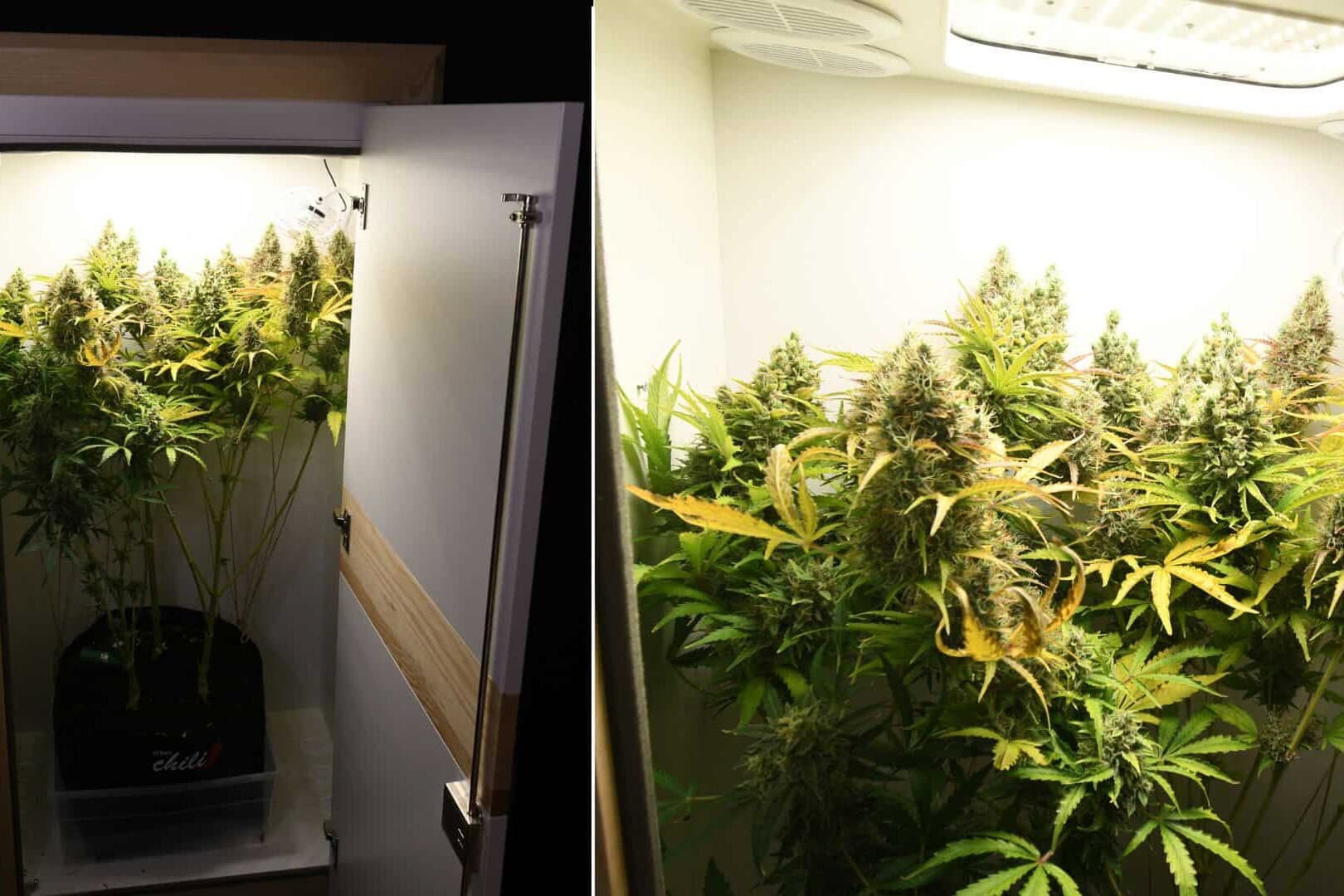
Before we get into the grow, let’s look at the setup. The Urban Chili 3.0 (full details on the manufacturer’s site at urbanchili.eu) is more than a grow tent – it’s a fully integrated grow cabinet that blends into a living space. With its wooden design and compact dimensions (65 x 45 x 133 cm), it looks more like a piece of furniture than a grow box.
Key features
Powerful LED lighting: 174 Samsung and Osram diodes in an 80-watt panel deliver a full spectrum (380–780 nm) with good PPFD – so there’s no separate grow light to choose or mount.
Air circulation & odour control: six ultra-quiet exhaust fans (~33 dB) and an activated-carbon filter keep air moving with minimal smell.
Low power consumption: around 93 watts total, so it’s energy-efficient and inconspicuous. Combined with autoflower genetics like Fat Banana Auto, it makes for a budget-friendly grow.
Plug-and-play: it ships pre-assembled with all the technical parts – you just add soil, seeds and nutrients. For what else is handy for timelapse grows, see my plant timelapse equipment guide.
Together these make it a solid option for discreet growing in a living room, bedroom or office. More info directly at urbanchili.eu. 🙂
Germination & early growth – laying the foundation
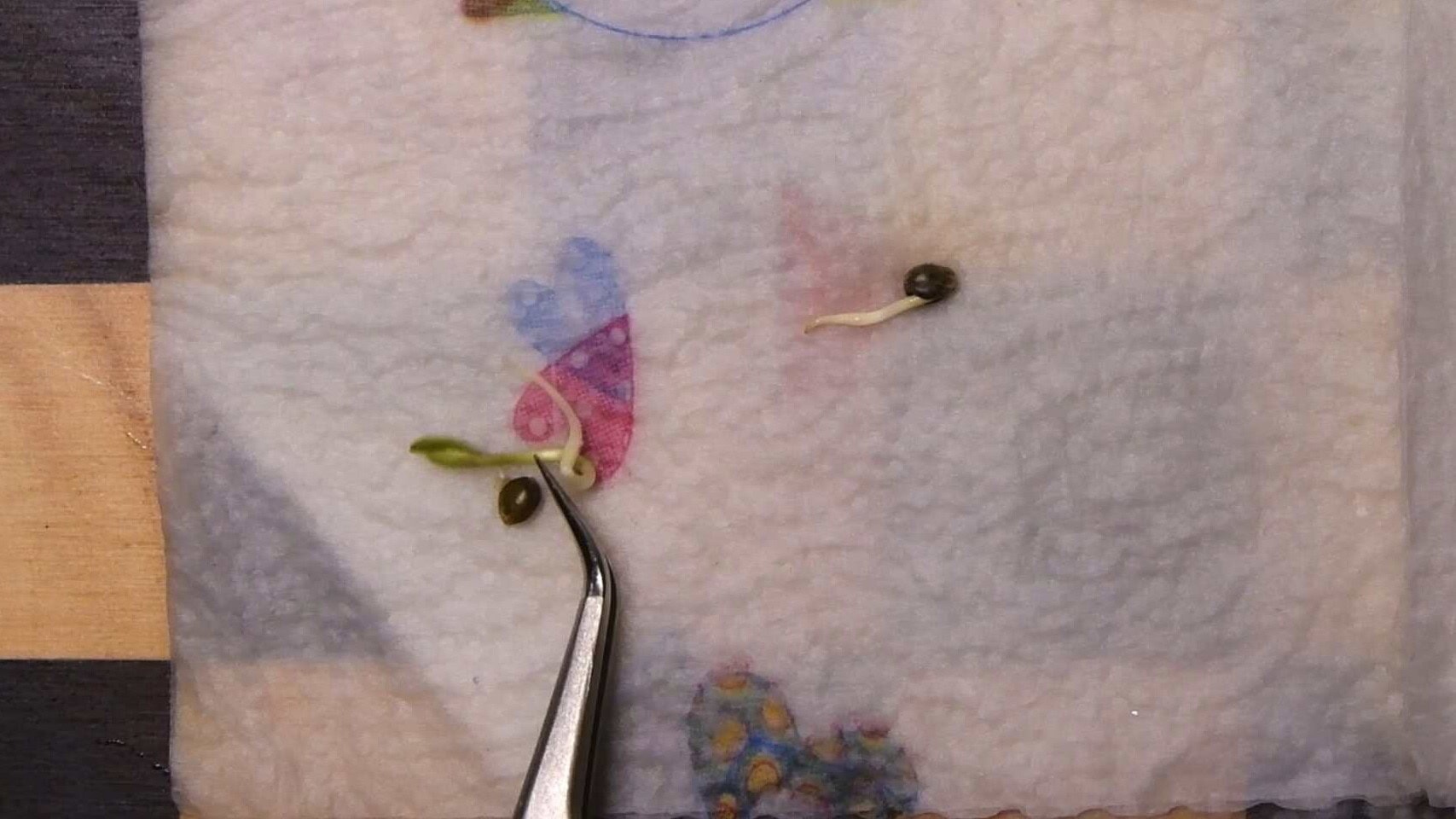
I started with three Fat Banana Auto seeds (Royal Queen Seeds) using the classic paper-towel method: moist paper towels in a sealed plastic bag, kept warm and dark. After about three days, two seeds had strong taproots, with the third not far behind. It’s the same germination method I use in my 157-day mango-from-seed grow if you want to see it on a different plant.
Once ready, I planted all three into high-quality soil, covered them with 1–2 cm of substrate, and put the pots straight into the grow box. Shortly after, all three broke the surface – even the late starter. At this stage it’s mostly about stable moisture, gentle airflow and not blasting the seedlings with too much light.
Vegetative phase – training & canopy management
One plant grew noticeably faster than the other two. To even things out, I used several training techniques – very similar to what I do in my autoflower cannabis guide:
Lower defoliation: I removed some lower leaves and small shoots to improve airflow, prevent mould, and push energy to the upper, better-lit bud sites.
Topping: once each plant had 4–5 active nodes, I topped the main stem to encourage bushier growth and more main colas instead of one tall central stem.
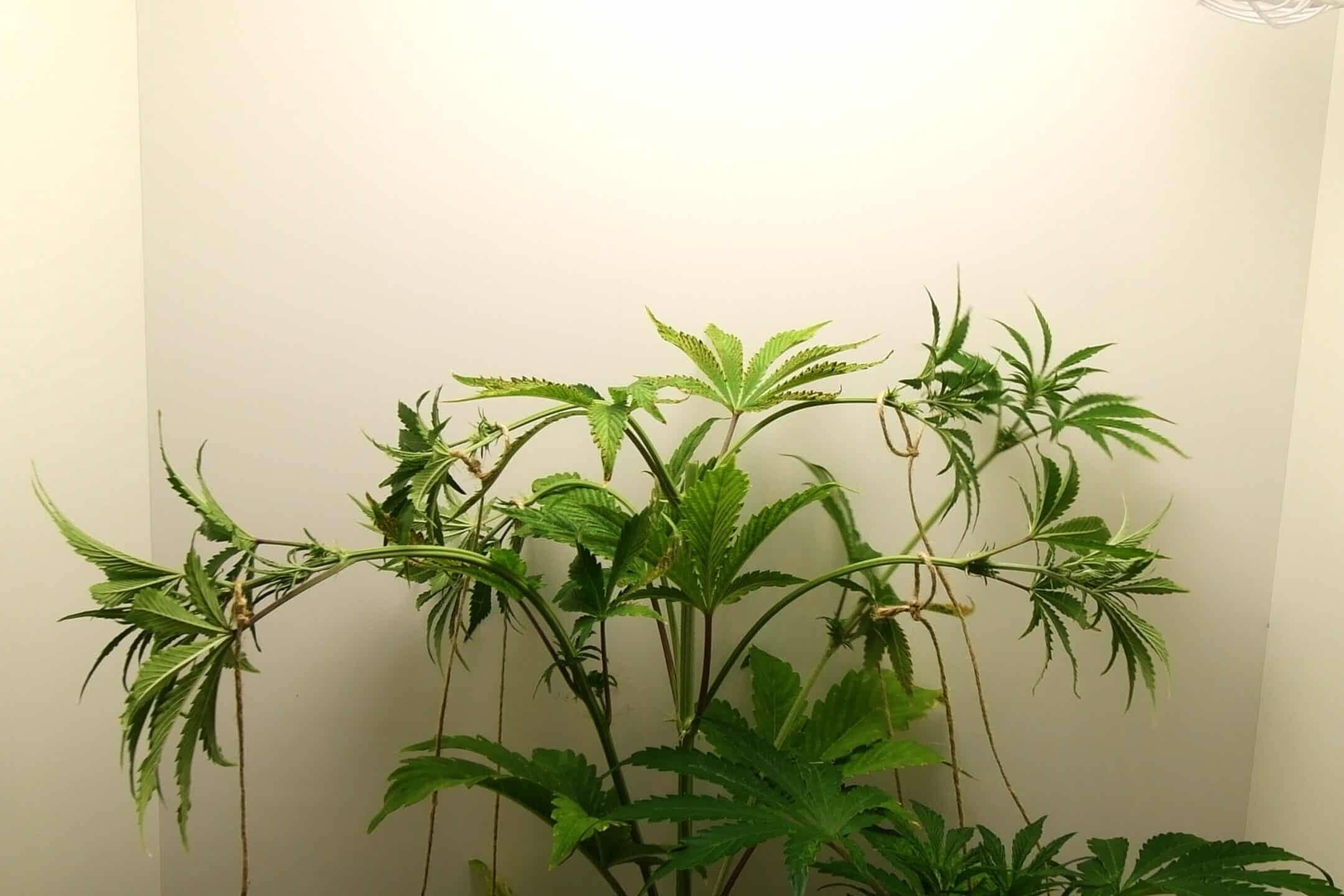
LST (low-stress training): I gently bent the tallest shoots down and tied them in place for a more even canopy. In the timelapse you can see the plants turn back toward the light – a natural reaction called phototropism. If you enjoy shaping plants, you’ll probably also like my cannabis bonsai tutorial.
Here’s a picture shortly after LST – you can clearly see the flattened canopy and all the future bud sites getting equal light:
Lighting – one of the most important factors
The Urban Chili 3.0 uses a tuned LED spectrum for both growth and flowering. I set the cycle to 18/6 (18 hours on, 6 off) – even though these are autoflowers and technically don’t need a dark period to start flowering.
Why give autos a dark period at all?
Autoflowers still benefit from a rest phase. Some leaves showed mild stress (slight curling and discolouration), and adjusting the schedule helped the plants recover and keep growing vigorously. For a deeper dive into light schedules for autos vs. photoperiod plants, see this RQS article on autoflower light cycles.
Flowering phase & lollipopping – focusing on bud production
Around day 40, the first flowers appeared – the signal to switch from grow to bloom nutrients. From there I used HESI Bloom (available in most grow shops). Just like in my autoflower grow, I start a bit below the bottle’s recommendation and work up slowly.
From then on the buds really took off, getting bigger and denser day by day. The LED panel gave more than enough light for fat, resinous flowers across the whole canopy.
On day 55 I did some lollipopping: defoliating roughly the lower third of the plant to conserve energy for the top colas where the light is strongest. If you’ve never tried it, this lollipopping guide is a great deep-dive.
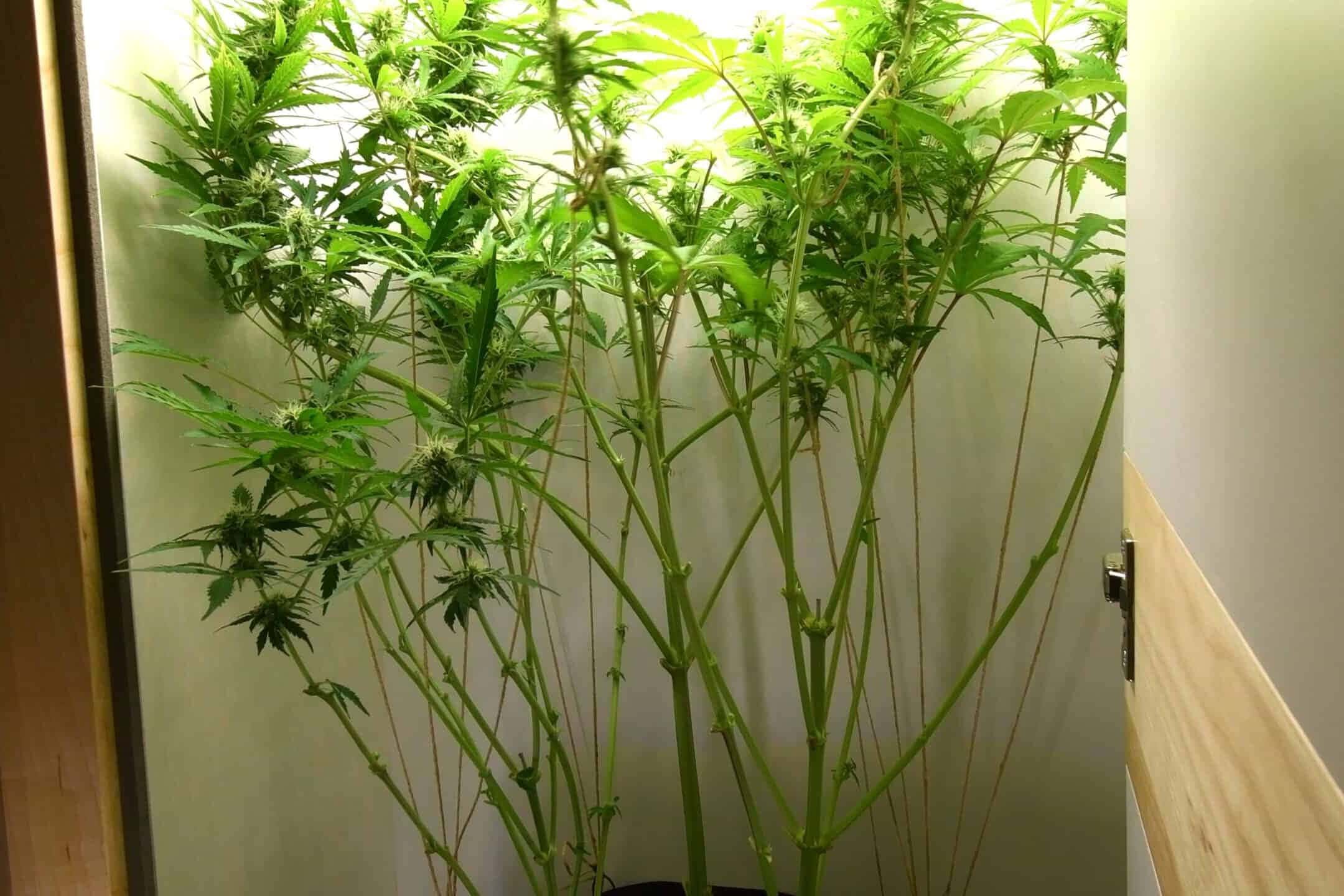
The result: dense, frosty buds across the canopy, with the lower area clean, airy and easy to manage – perfect for small cabinets where every centimetre of light matters.
Conclusion – is the Urban Chili grow box worth it?
For this kind of grow, yes. The Urban Chili 3.0 worked well as a compact, quiet and discreet indoor system. It’s beginner-friendly and, with the right techniques, delivers good results – especially paired with robust autoflower strains like Fat Banana Auto.
The plants thrived, and with topping, LST and lollipopping I got noticeably better yield and quality even in the limited space. If you enjoy watching plants transform over weeks, don’t miss the full Fat Banana Auto timelapse below – and feel free to explore my other projects like growing cucumbers from seed or how to grow lettuce from seed.
Frequently asked questions
In this grow I ran three Fat Banana Auto plants comfortably with training. For autoflowers, two to three trained plants suit the 65 x 45 x 133 cm footprint well.
Yes. The Urban Chili uses quiet exhaust fans at around 33 dB plus an activated-carbon filter, and the cabinet looks like furniture, so it suits a living room or office.
No. Autoflowers flower by age regardless of light hours, so they do not need a 12/12 switch. A rest period such as 18/6 can still reduce stress and save electricity, which is what I ran here.
It varies a lot by strain, light and technique. Training methods like topping, LST and lollipopping noticeably improve both yield and quality in a small cabinet compared to leaving plants untrained.