TL;DR – Cannabis Bonsai in a Nutshell
- I grew a cannabis bonsai (cannabonsai) from seed and styled it as a tiny tree on a lava rock.
- The focus is bonsai aesthetics: exposed roots, rock, a miniature canopy and a full cannabis bonsai timelapse.
- Basic conditions: well-draining substrate, warm temperatures, plenty of light and careful watering.
- Bonsai wire, root-over-rock styling and decorative stones turn a normal plant into a tiny landscape scene.
How to Grow a Cannabis Bonsai (Cannabonsai)
Ever wanted to turn a cannabis plant into a tiny tree? In this project I grew a cannabis bonsai (cannabonsai) from seed and styled it on a lava rock – roots exposed, stone visible, full bonsai vibes. This is my second cannabis bonsai (the first one taught me plenty about what not to do), grown from a single Wedding Cake seed and filmed start to finish as a timelapse. Below I walk you through my process – soil, light, temperature and styling – and link the full timelapse at the end.
Think of this less as a strict “you must do exactly this” tutorial and more as a behind-the-scenes look at my tiny-tree experiment.
Getting Started – Seed, Strain and First Growth
Like every bonsai story, this one starts with a single seed. For this cannabonsai project I used the strain Wedding Cake. I sowed the seed just below the surface of a small pot filled with light, loose, nutrient-rich soil and watered it lightly. After a few days the seedling popped up and started growing its first leaves.
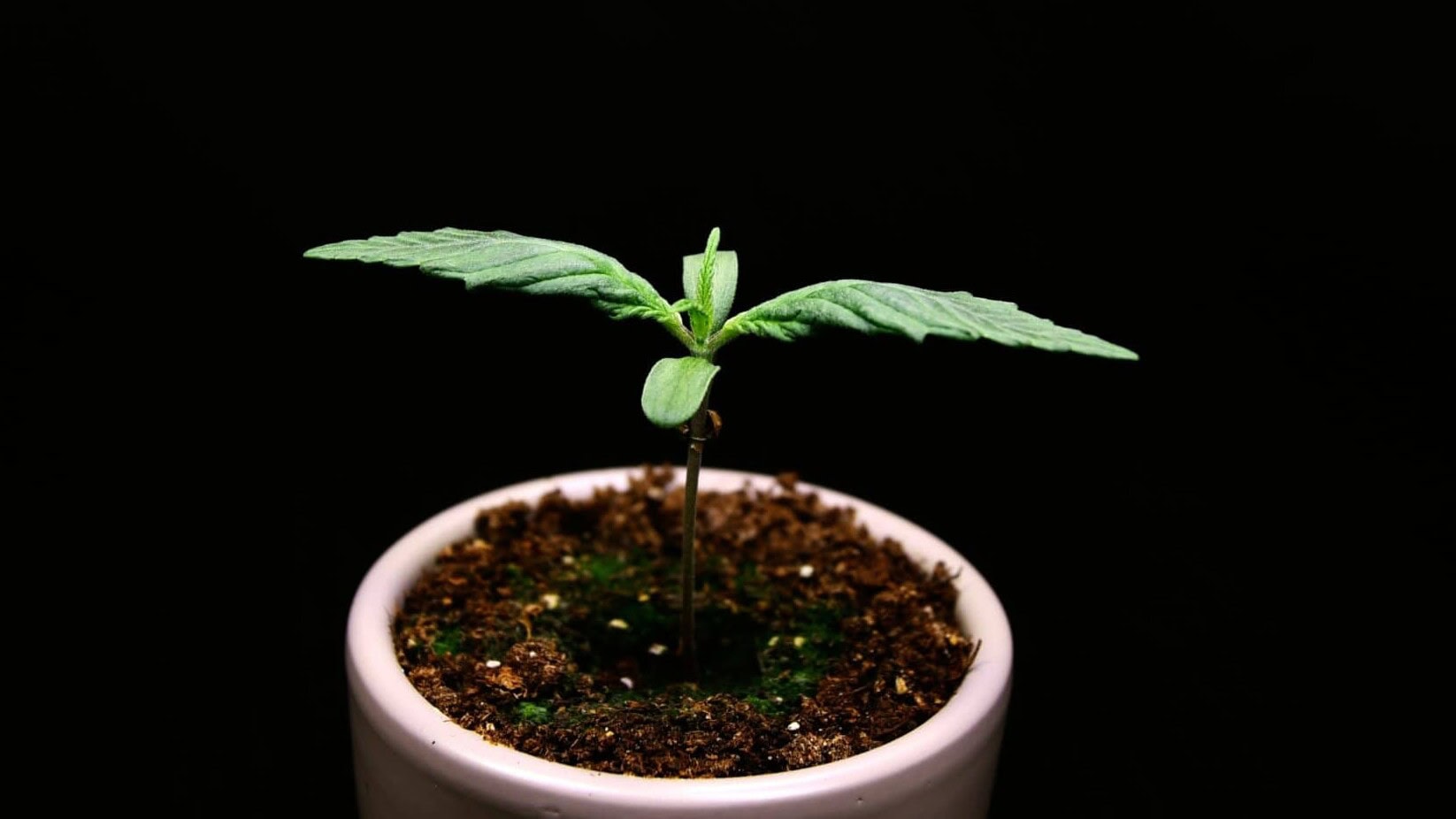
At this stage the plant still looks pretty innocent: a thin, delicate stem, the first round baby leaves and the first pair of serrated cannabis leaves reaching for the light. You can already imagine the future cannabis bonsai shape – even if right now it’s just a tiny green stick with ambition.
Once the little plant had grown several sets of leaves beyond the first tiny ones and the stem had thickened a bit, it was ready for the fun part: turning it into a bonsai-style mini tree.
Repotting and Styling the Cannabis Bonsai (Root-Over-Rock)
One of my favourite parts of this project was moving the plant onto a small lava rock to give it that “bonsai on a mountain” look. This is where it really starts becoming a cannabonsai instead of “just another plant in a pot”.
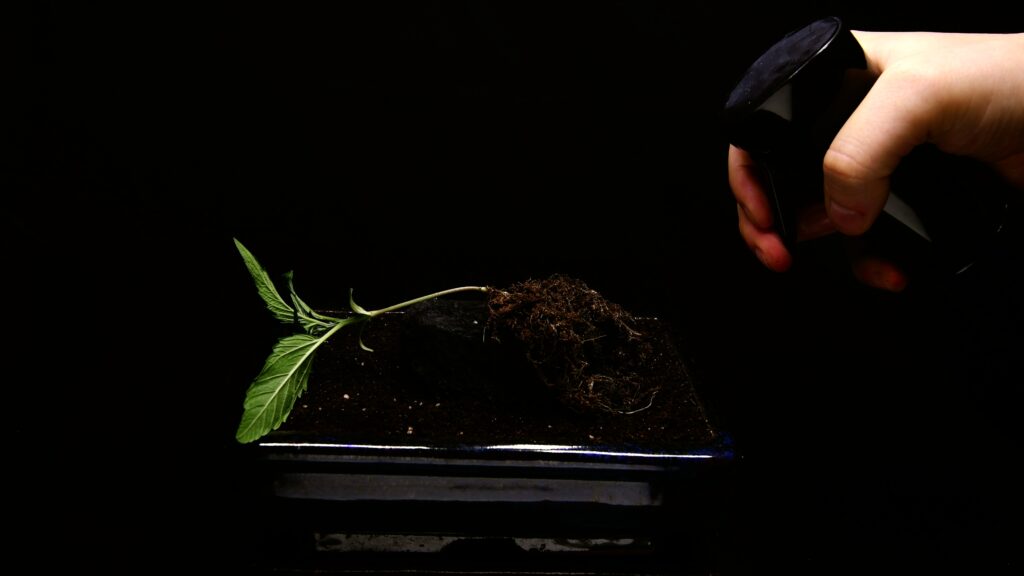
Here you can see the moment of repotting: the young plant is lifted out of its original pot, the roots gently loosened and then spread across the rough surface of the lava rock. The shallow container underneath later holds the soil that fixes everything in place.
Over time, as the plant kept growing, the roots adapted to the rock and naturally wrapped around it – exactly what you want for that bonsai “root-over-rock” effect.
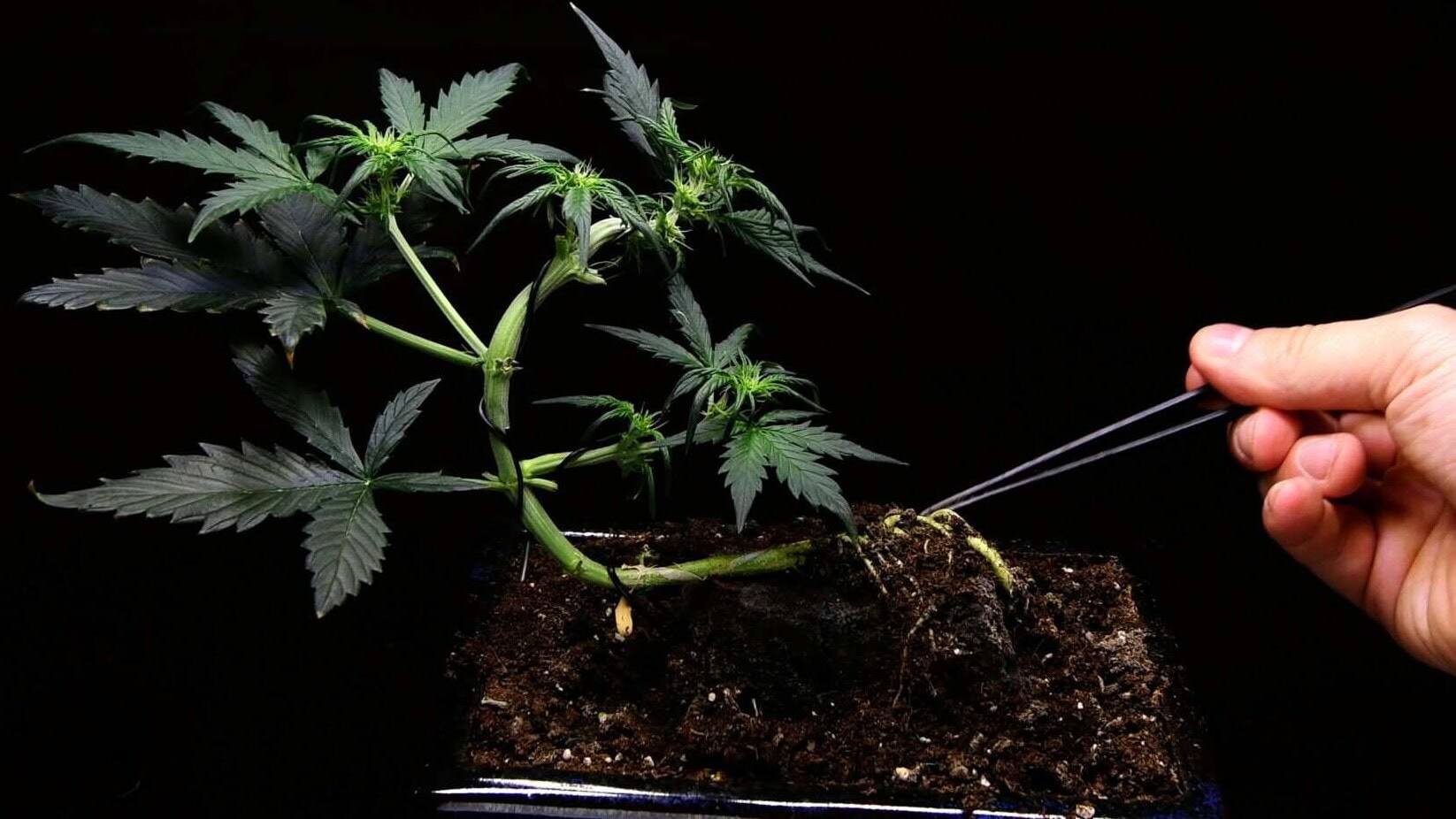
In this stage more of the soil around the rock has been carefully removed, revealing the root system. You can clearly see how the roots cling to the stone, almost like little fingers holding on to a cliff. This is where the cannabis bonsai really starts to look like a tiny tree holding onto a mountain.
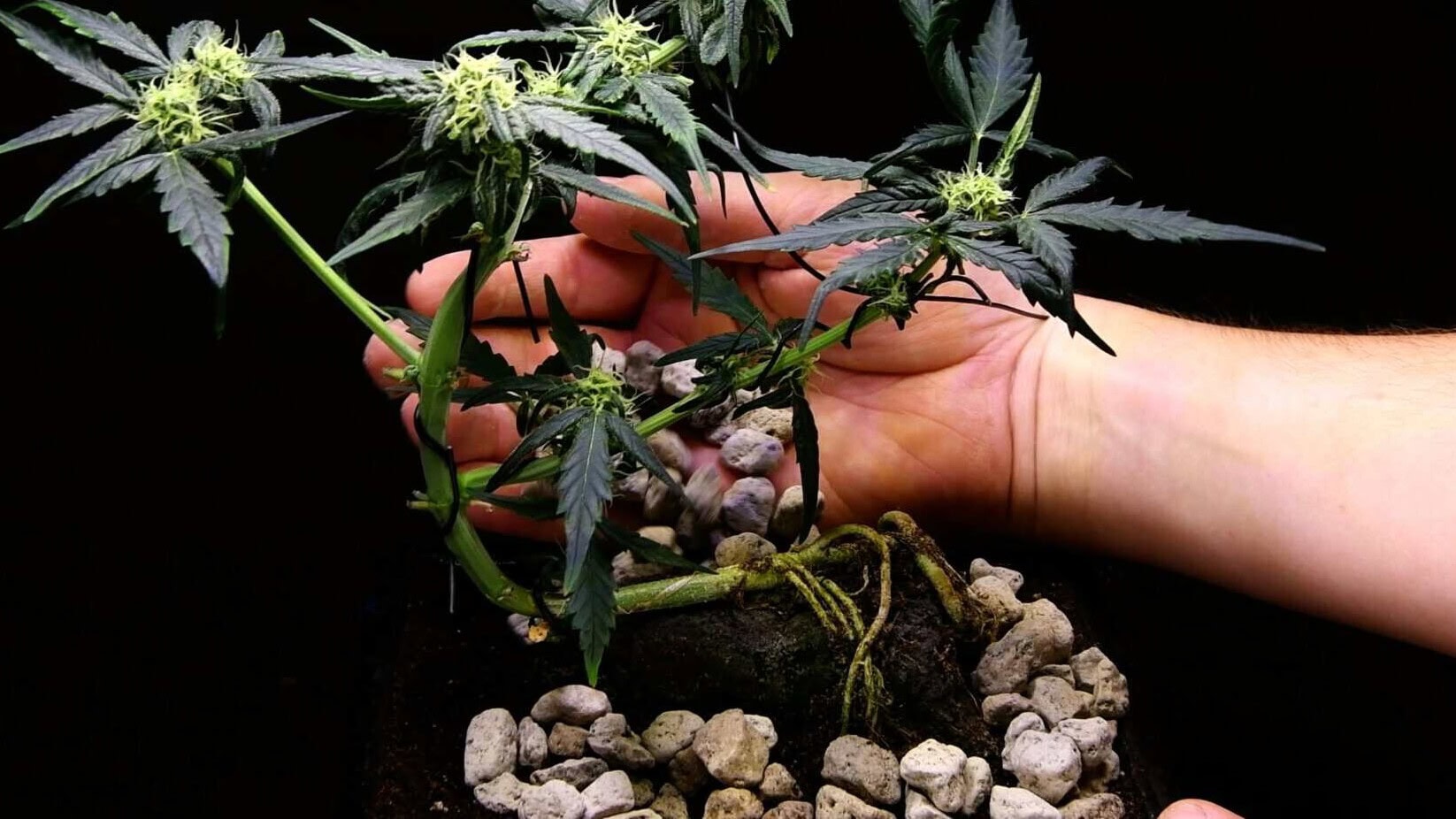
To complete the composition, I added small decorative stones around the base. Together with the lava rock and the exposed roots, the whole setup starts to resemble a miniature landscape scene – the kind of thing you could imagine existing on a steep mountain slope, just in 1:20 scale.
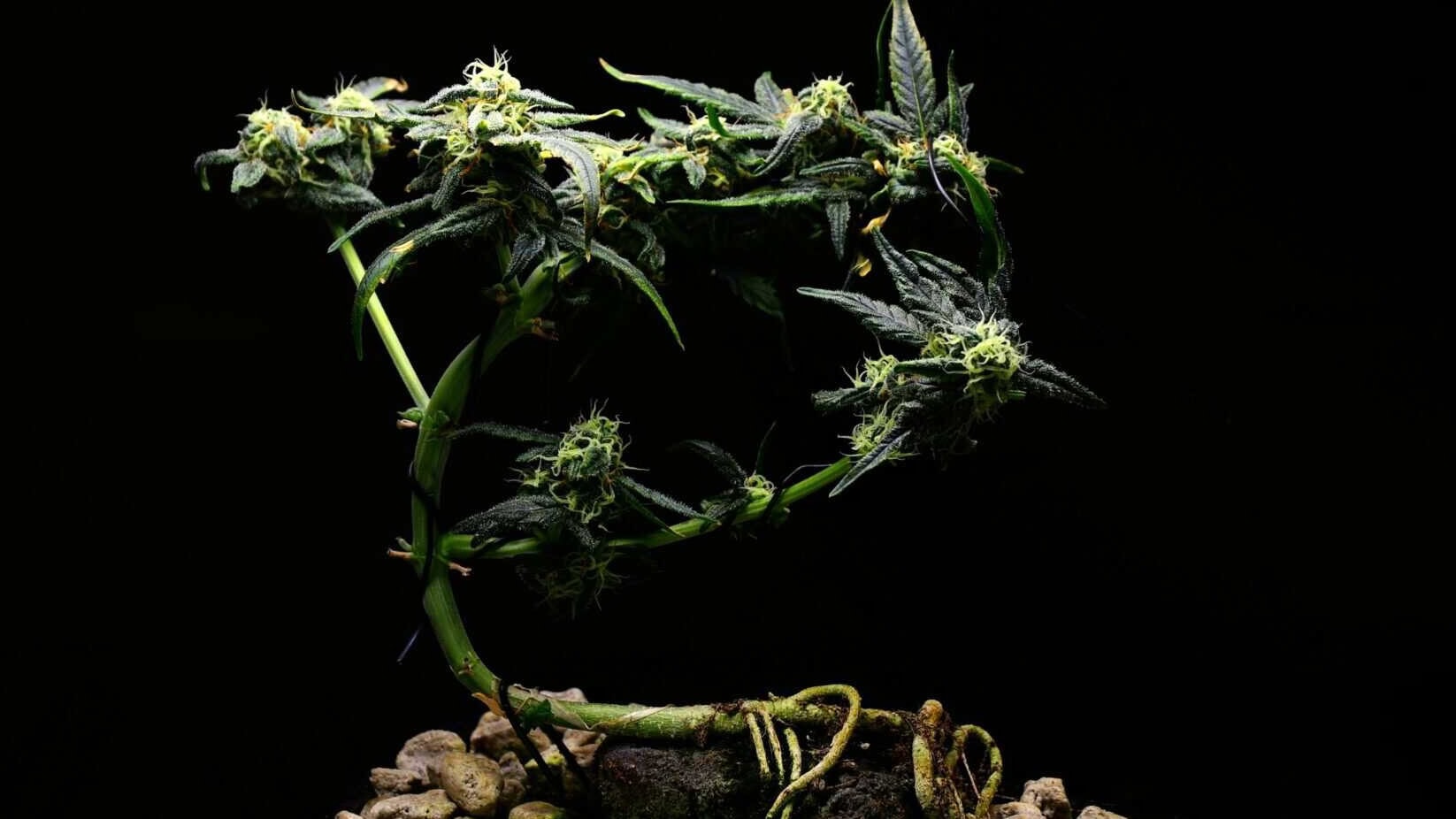
Here’s the finished bonsai: the trunk has thickened and slightly twisted, the canopy is compact and rounded, the roots clearly hug the rock, and the stones around it frame the scene like a tiny diorama. It’s still clearly cannabis – but in full bonsai cosplay.
Flowering Phase – Tiny Tree, Tiny Buds
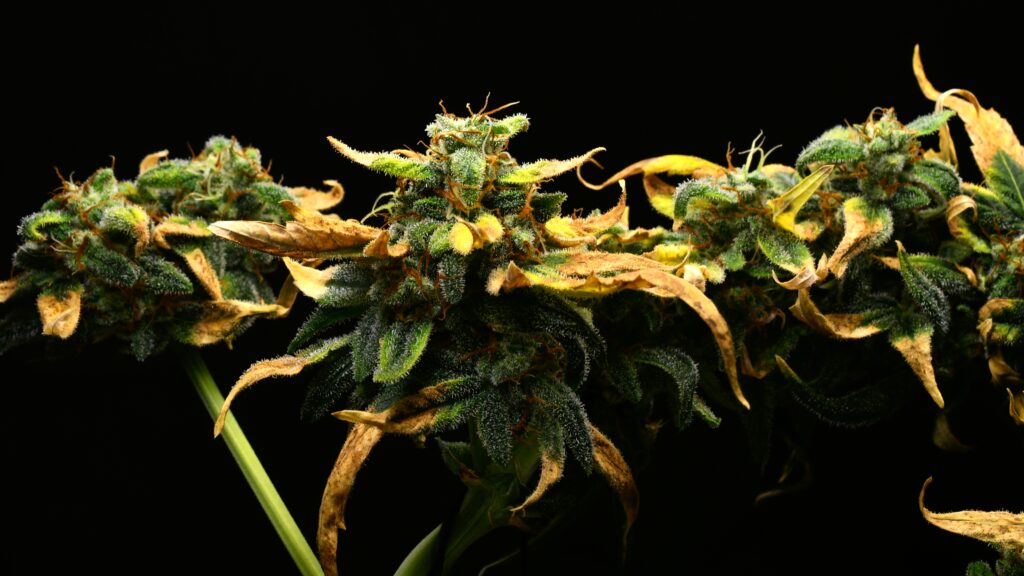
In the flowering phase the cannabis bonsai takes on a completely different character: small buds appear along the branches, tiny sugar leaves frame them, and the plant starts to look like a miniature version of a classic Christmas tree – just with a slightly different vibe. Seeing buds form on such a small, styled tree is oddly satisfying, like watching a regular grow in “bonsai mode”.
Basic Growing Conditions for a Cannabis Bonsai
To keep the cannabis bonsai healthy I paid attention to the usual suspects: substrate, temperature, watering and light. Nothing extreme – just covering the basics so the plant could focus on looking good.
Substrate
I used a well-draining soil mix with some nutrients so the roots could develop well and the plant had enough food without sitting in soggy soil.
Temperature
I kept the temperature in a warm, comfortable range around 70–85°F (21–29°C), which worked well for this small bonsai setup.
Watering
As with most bonsai-style plants, I watered once the soil started to dry out and the plant signalled it needed a drink. Overwatering is the easiest way to annoy roots, so I tried to avoid that classic mistake.
Light
Like any cannabis plant, a cannabonsai appreciates plenty of light. Autoflower strains are more forgiving about light cycles, while photoperiod strains usually need longer days in veg and shorter days to flower. In this project I simply worked with the strain’s needs and focused on shaping the plant.
Fertilizing and styling
During the vegetative phase I used fertilizer suited to leafy growth, then switched to something more bloom-oriented once flowering started. Along the way I kept shaping the cannabis bonsai with wire and selectively removed some lower leaves to show off the stone, roots and trunk – more bonsai, less bush.
Cannabis Bonsai Timelapse – Watching the Tiny Tree Evolve
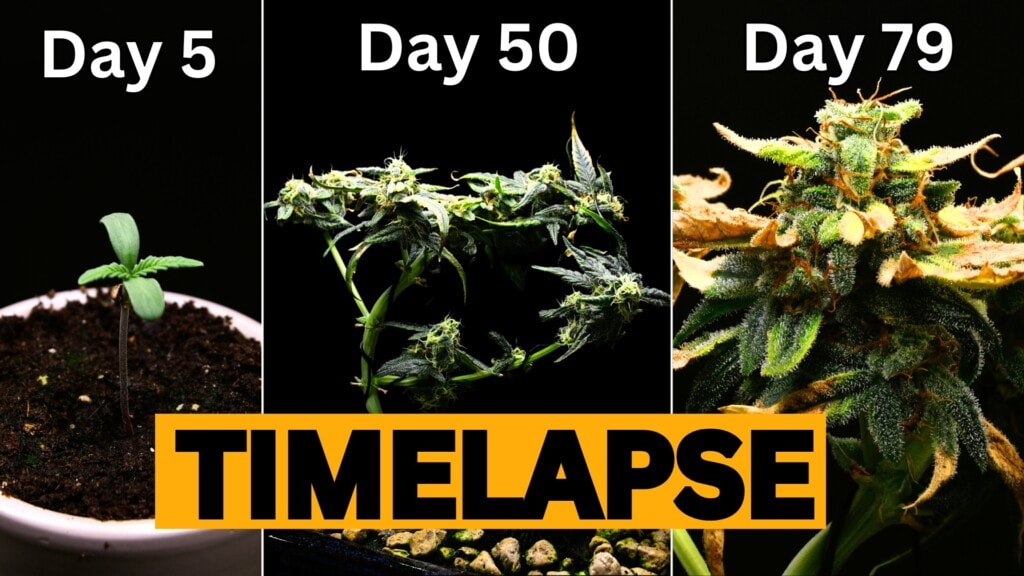
Because the changes are gradual, this kind of project is perfect for a cannabis bonsai timelapse. I filmed the whole thing – from early seedling to the styled, flowering bonsai – and turned it into a short video.
If you’re into filming plant projects in general, everything I use is in my Plant Time-Lapse Equipment Guide – camera, interval settings and lighting.
A Quick Word on Bonsai (for Beginners)
I’m still fairly new to bonsai myself, so treat this as an experiment rather than a masterclass. Bonsai is the art of cultivating miniature trees through controlled pruning, root management and aesthetic shaping – the goal is a living sculpture, not just a small plant. If you want to go deeper into the actual techniques (pruning, wiring, root-over-rock and styling), these are solid starting points: Bonsai Empire and the RHS bonsai guide.
Frequently asked questions
A cannabis bonsai (or cannabonsai) is a cannabis plant styled like a bonsai tree: small pot, shaped trunk, exposed roots or rock and a compact canopy. The focus is on aesthetics and form rather than maximum yield.
Yes. The main goal of a cannabonsai is the miniature-tree look. It is a creative side project for plant nerds who enjoy styling and watching slow growth, especially in timelapse.
Absolutely. Any slowly changing plant project is perfect for timelapse: set up a stable camera, keep conditions consistent and let the plant do its thing.
Autoflower strains are the most forgiving, since they flower on their own and do not depend on a strict light cycle. Photoperiod strains work too, but you steer veg and flowering through day length.
In the end I’m pretty happy with how this cannabis bonsai turned out – still one of my favourite “tiny tree” projects, especially when the whole transformation is compressed into a few seconds of video. Tiny trees, big joy. 🌱
More Bonsai Projects You Might Like
- Avocado Bonsai from Seed – 1-Year Timelapse – a fast-growing, beginner-friendly root-over-rock project.
- Growing a Pomegranate Bonsai from Seed – another tiny tree from supermarket fruit, with flowers and fruit.
- Plant Time-Lapse Equipment Guide – the camera setup behind every timelapse.