TL;DR (quick summary)
I turned one seed from a supermarket pomegranate into a tiny tree over 370 days. The hardest phase wasn’t the growing — it was bare-rooting the seedling and wiring it into a bonsai pot at around day 300. Key tip: let the plant bush out and even flower first, then convert it to a bonsai once the flowers fade and it’s calm.
You can grow a pomegranate bonsai from seed using nothing more than a piece of fruit from the grocery store. Inside one pomegranate are hundreds of deep red arils, and every seed hiding in that pulp could become a tree — or, with patience and one brutal afternoon of pruning, a bonsai. I planted this on 2025-03-16 and filmed it for 370 days, from a pale seed wiped clean on a paper towel to a wired little tree in a mineral mix. If you’ve followed my avocado bonsai from seed, this one runs on the same stubborn logic: grow it big, then make it small.
Watch the full timelapse
One year of growth compressed into a couple of minutes. For more seed-to-tree experiments like this, the rest live on my YouTube channel.
The day-by-day journey
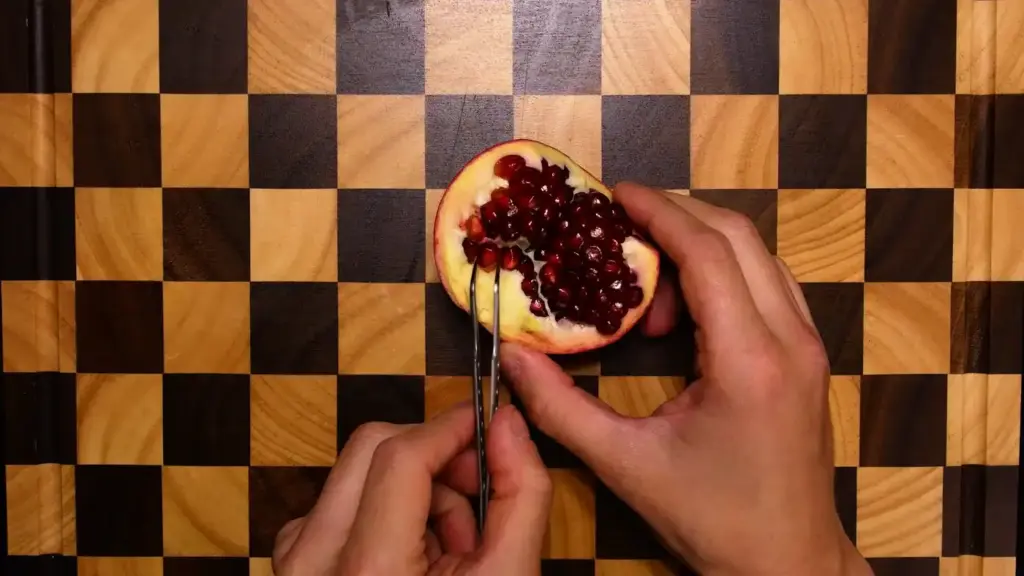
It starts with a circle cut around the top and the “lid” lifted off, then a couple of shallow cuts down the sides until the whole fruit breaks open. I picked out one aril, rolled it in a paper towel to strip the pulp away, and what was left was the actual seed — small, pale, ready to grow.
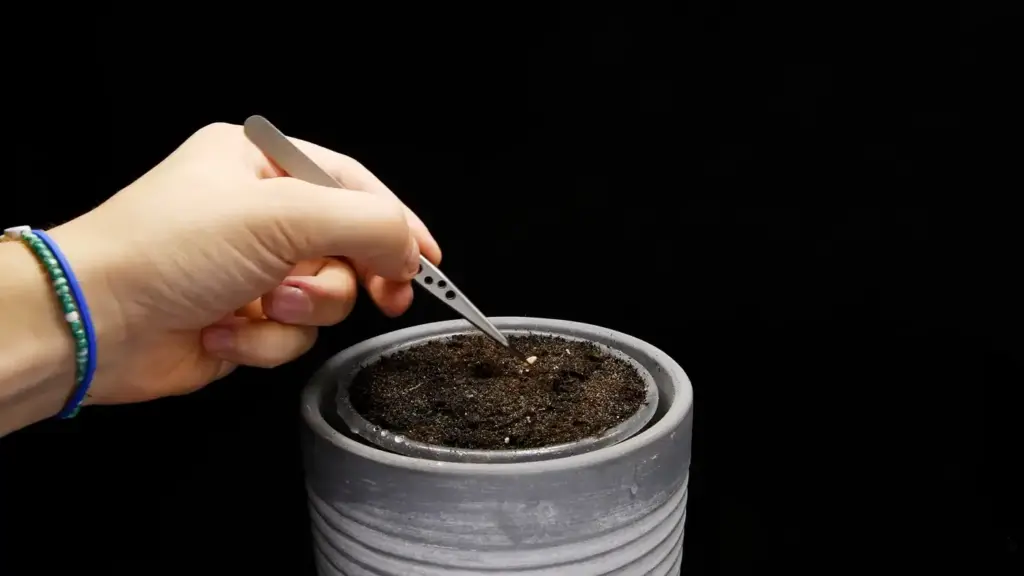
That seed, plus a second one as a backup, went straight onto moist soil. A quick mist of water, and then the boring part: you wait. A few weeks in, the first sign of life pushed up — a green shoot barely the size of my finger, already unfolding its first real leaves.
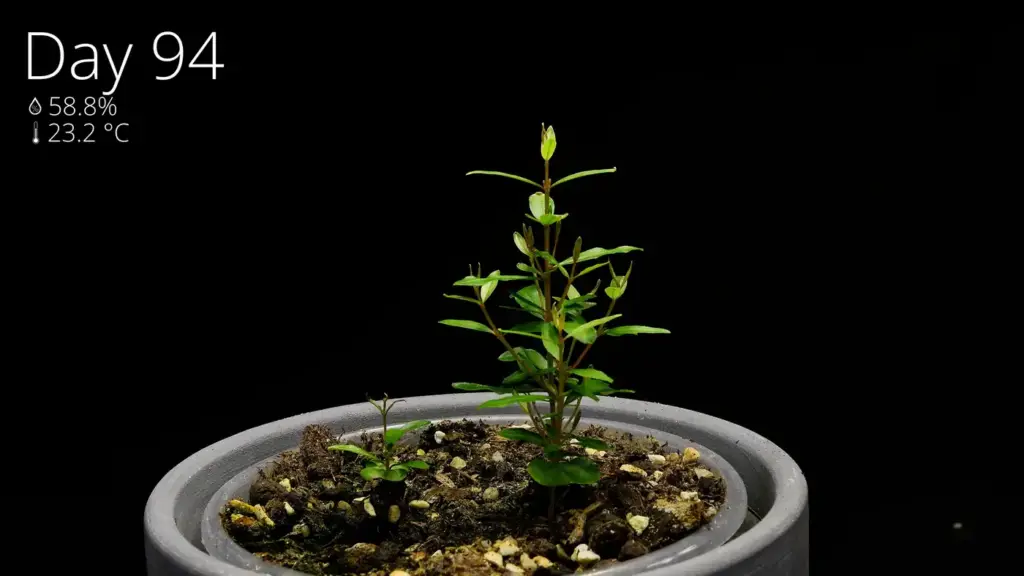
Once it starts, it doesn’t slow down. By around day 90 the stem had thickened and more leaves were pushing out, and the whole thing looked nothing like that first tiny sprout.
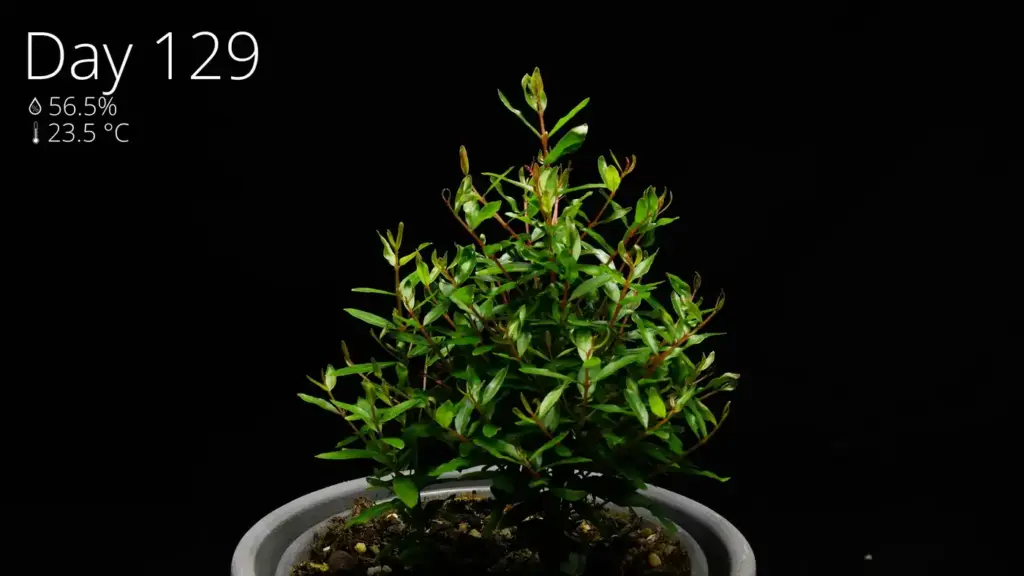
Week by week, more leaves and more branches. By day 129 it had filled out and turned properly bushy. This is the phase where you do nothing clever and just let it run.
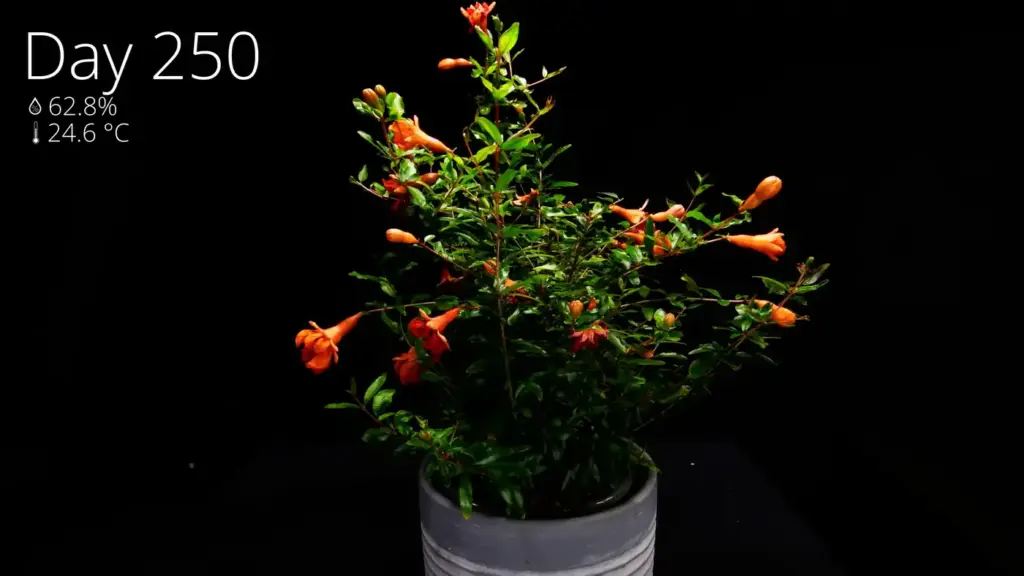
Then, half hidden in all that green, the first tiny red bud. Those flowers are the real reward — bright red, waxy, shaped like little trumpets, and the plant kept making more. Honest part though: these won’t turn into fruit yet. A pomegranate grown from seed takes several years before it fruits, and a small, pruned bonsai may never fruit at all. That was never the goal.
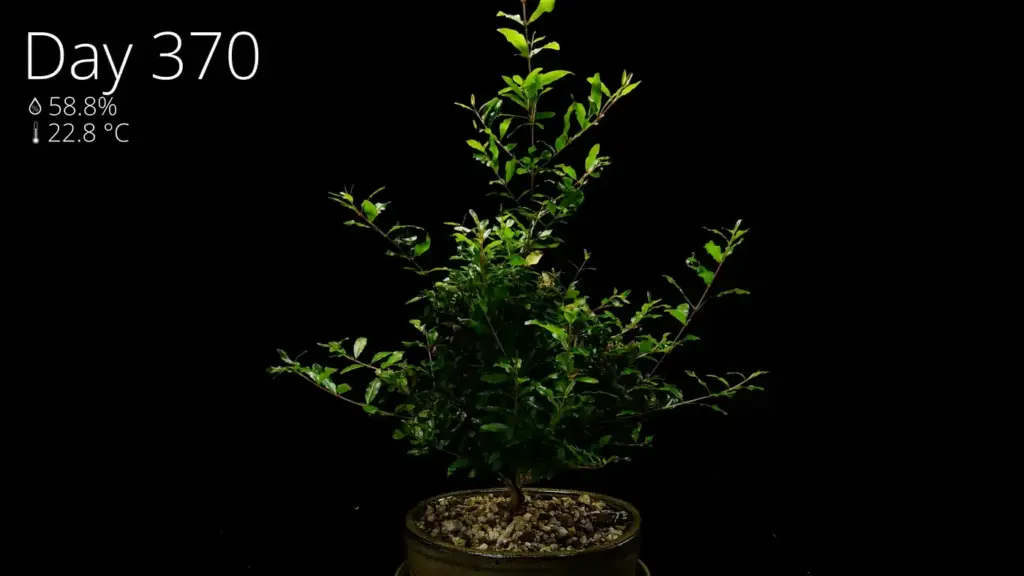
Jump forward to day 370 and here’s where it all landed. But between that bushy flowering plant and this little tree sits the part that actually makes it a bonsai — so let’s walk through it.
Grow pomegranate bonsai from seed: the full method
This is the whole process, start to finish. I grew the plant indoors at roughly 20–24 °C with about 50–60% humidity under a grow light. If you want a deeper reference on the species and on bonsai basics, the Royal Horticultural Society plant guides are a solid starting point.
- Get a seed. Cut a ripe pomegranate open, pick out one aril, and rub the red pulp off with a paper towel until only the pale seed is left. Plant that one plus a backup seed.
- Sow and germinate. Sow on moist, well-draining soil, mist with water, and keep it warm under a grow light until germination, which took a few weeks for me.
- Grow it on. Let it bush out and even flower before any bonsai work. The flowers fading is your signal that the plant is calm enough to repot.
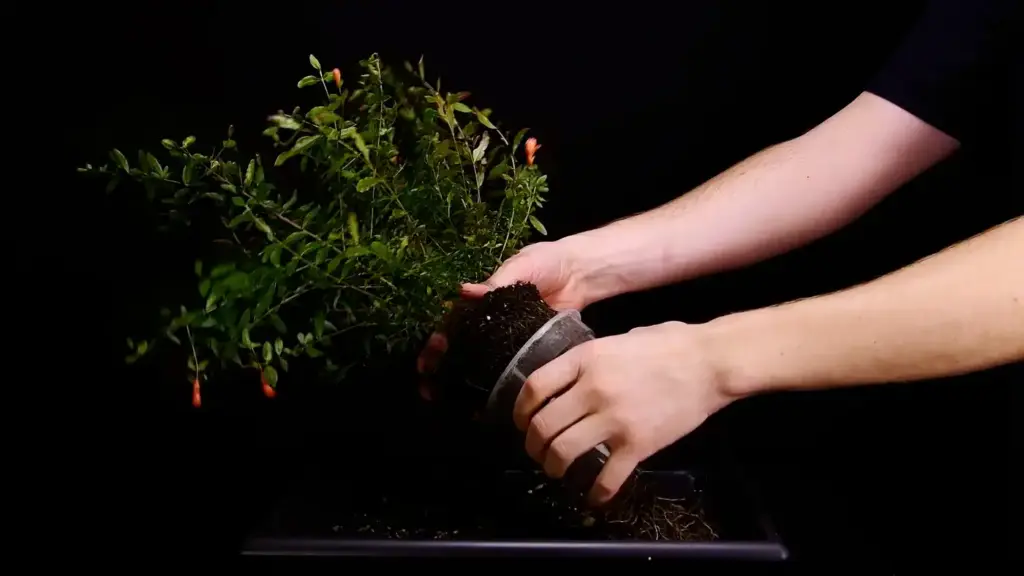
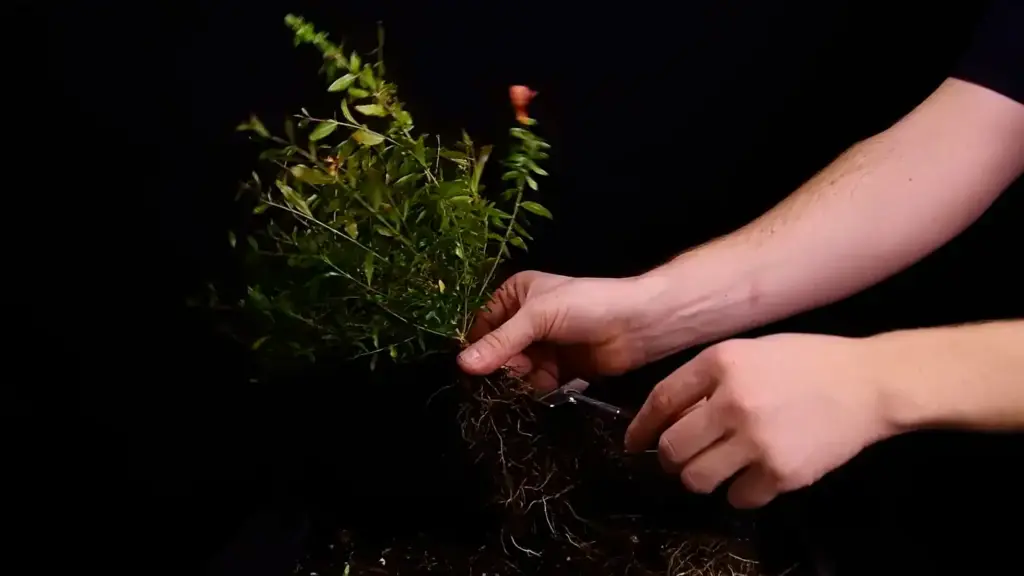
- Unpot and bare-root the stronger seedling. Loosen the roots poking out the bottom, squeeze the pot from every side until everything comes free, then carefully tease the two plants apart. Pick the bigger, stronger one. With a small bonsai rake, work around the root ball in circles, teasing the old soil away bit by bit. No rushing — you want the roots intact, not ripped.
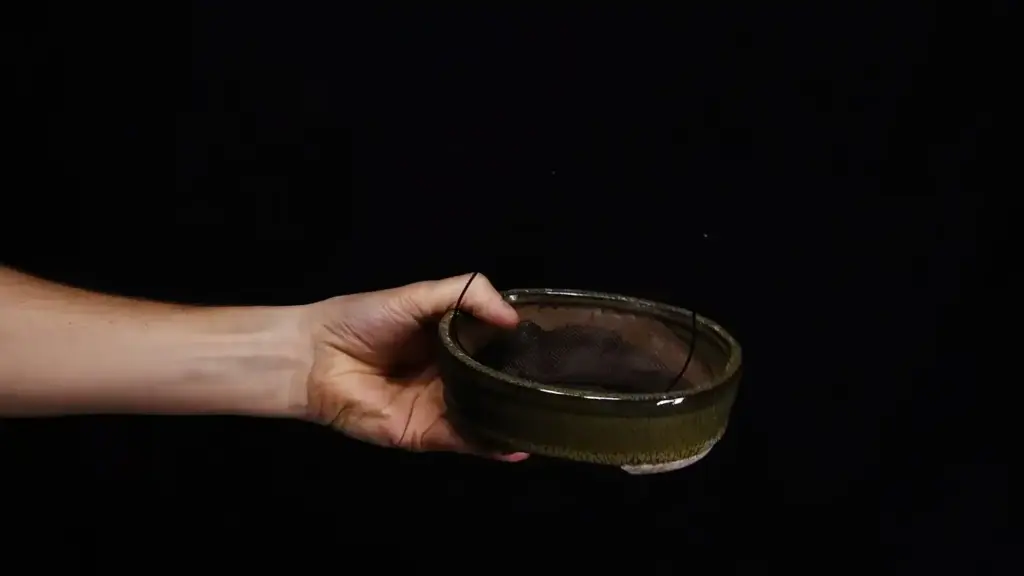
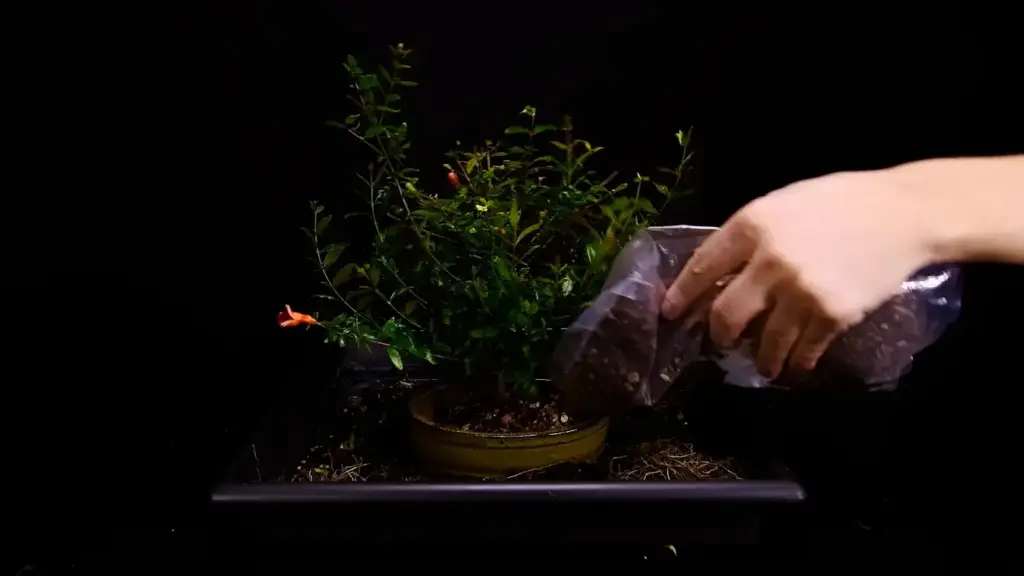
- Prep and plant the pot. Cover each drainage hole with a small mesh screen so the substrate stays in but water still drains. Thread an anchoring wire up through the holes from underneath, set the tree where you want it, then bend the wire up over the roots and twist it down tight to lock everything in place.
- Fill with a mineral mix. I use a purely mineral substrate — no regular soil — because it drains fast and keeps the roots healthy. Add it bit by bit, working it in around the roots and tapping as you go so there are no air pockets left.
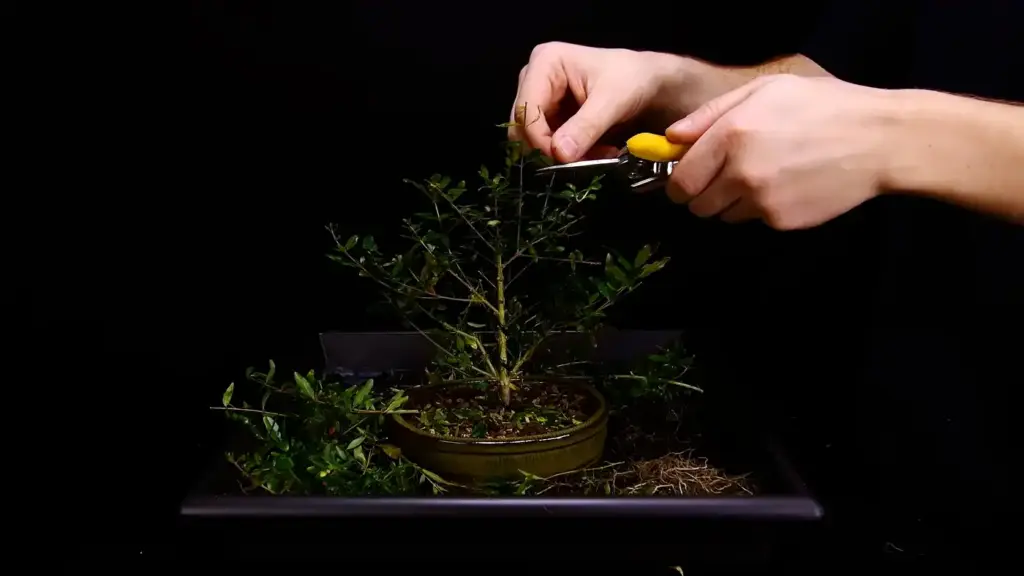
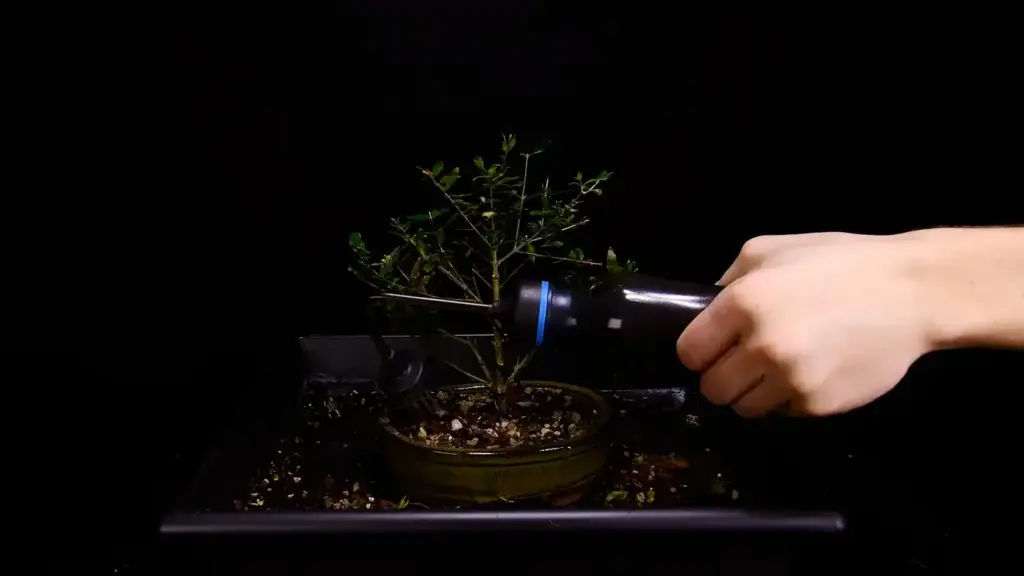
- Prune, top off, and water deeply. Do the structural prune — snip by snip, take off the branches that don’t fit the shape you’re after. It looks like a lot, but every cut tells the tree where to grow next. Add one last layer of substrate, then give it a slow, thorough first watering to settle the mineral mix and give the roots solid contact with their new home.
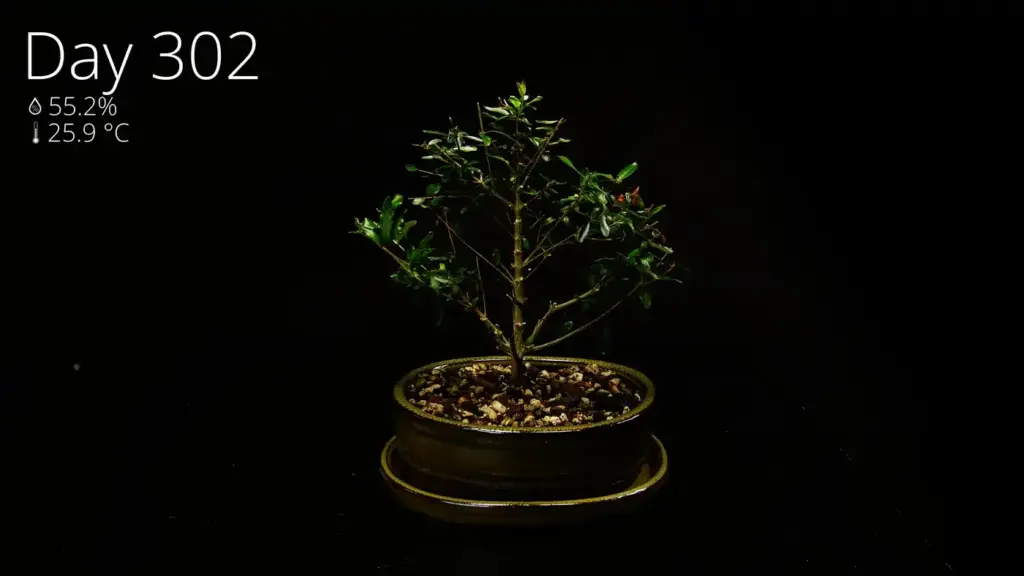
After all that root work and pruning, it does almost nothing at first — just adjusting. Then it kicks in. Fresh shoots push out, new leaves unfold in waves of bright green, and the whole thing fills back in fuller and denser than before the cut.
Common mistakes
My one honest regret: I planted two seeds instead of one. The backup was good insurance for germination, but both took, and the two seedlings ended up competing for the same pot. Sticking with a single seed probably would have sped the growth up a little. If you do sow a backup for safety, be ready to separate them early rather than letting them fight it out like mine did.
Frequently asked questions
Yes. The seeds inside an ordinary store-bought pomegranate are viable. Wipe the pulp off one, sow it on moist soil, keep it warm and lit, and it germinates in a few weeks. The bonsai part comes much later, once the plant is established.
Probably not, and not for years. A pomegranate from seed takes several years to fruit, and a small, pruned bonsai may never fruit at all. Grow it for the tree and the bright red flowers, not for the harvest.
Wait until it has bushed out and flowered. As the first flowers fade, the plant calms down — that’s the moment to unpot, bare-root it, and wire it into a bonsai pot. I did mine at around day 300.
A purely mineral bonsai mix drains fast and keeps the roots healthy in a shallow pot. Regular potting soil holds too much water for a freshly bare-rooted tree. Tap it in around the roots and water deeply to remove air pockets.
Plenty. If pomegranate hooks you, I’ve done a full avocado bonsai from seed and even a cannabis bonsai project. The grow-big-then-shrink approach is the same each time.
One year on
From a single supermarket seed to a wired little tree in 370 days — flowers, a full bare-root repot, one nerve-wracking prune, and a fuller comeback than I expected. It’s clearly thriving now, and the fun part is that it’s only just becoming a bonsai. How long do you think I should keep it growing? Tell me in the comments — and if you’ve started one of your own, I want to see it. For something completely different from seed, try my white mango from seed experiment next.