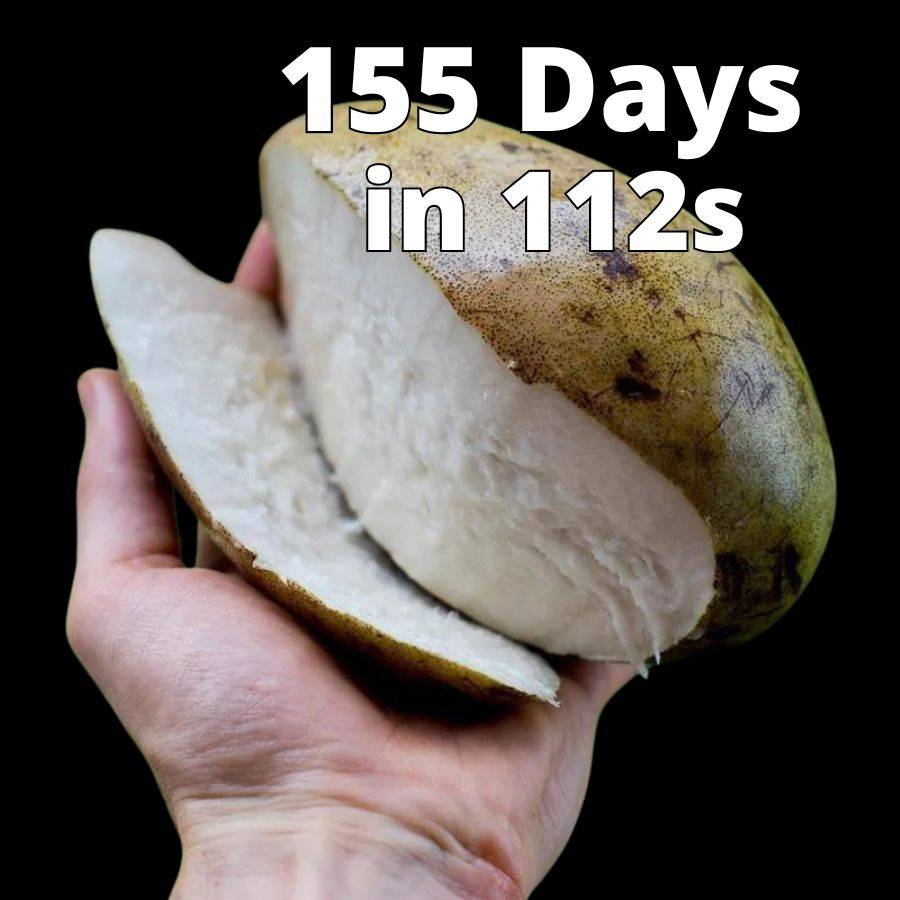
Have you ever heard of a white mango? This rare, pale-fleshed fruit is a real curiosity in the plant world, and when I got my hands on a couple of white mango seeds, I knew I had to capture their growth as a timelapse. Growing any mango from seed is a fun challenge – but growing a white mango, and testing two germination methods at once, turned into a proper experiment (with one big lesson along the way).
TL;DR – Growing a White Mango from Seed
- The white (or “ivory”) mango is a rare, pale-fleshed mango – grown from seed the same way as any other mango.
- I started one seed in water and one in soil to compare the two methods – both work.
- My big mistake: 24-hour light stressed the seedlings badly. Switching to 12–14 hours fixed it.
- Mango seedlings want warmth, well-draining soil, steady moisture and humidity.
- This was a long-term experiment that didn’t go perfectly – and was all the more instructive for it.
Water vs. Soil: Two Ways to Start the Seeds
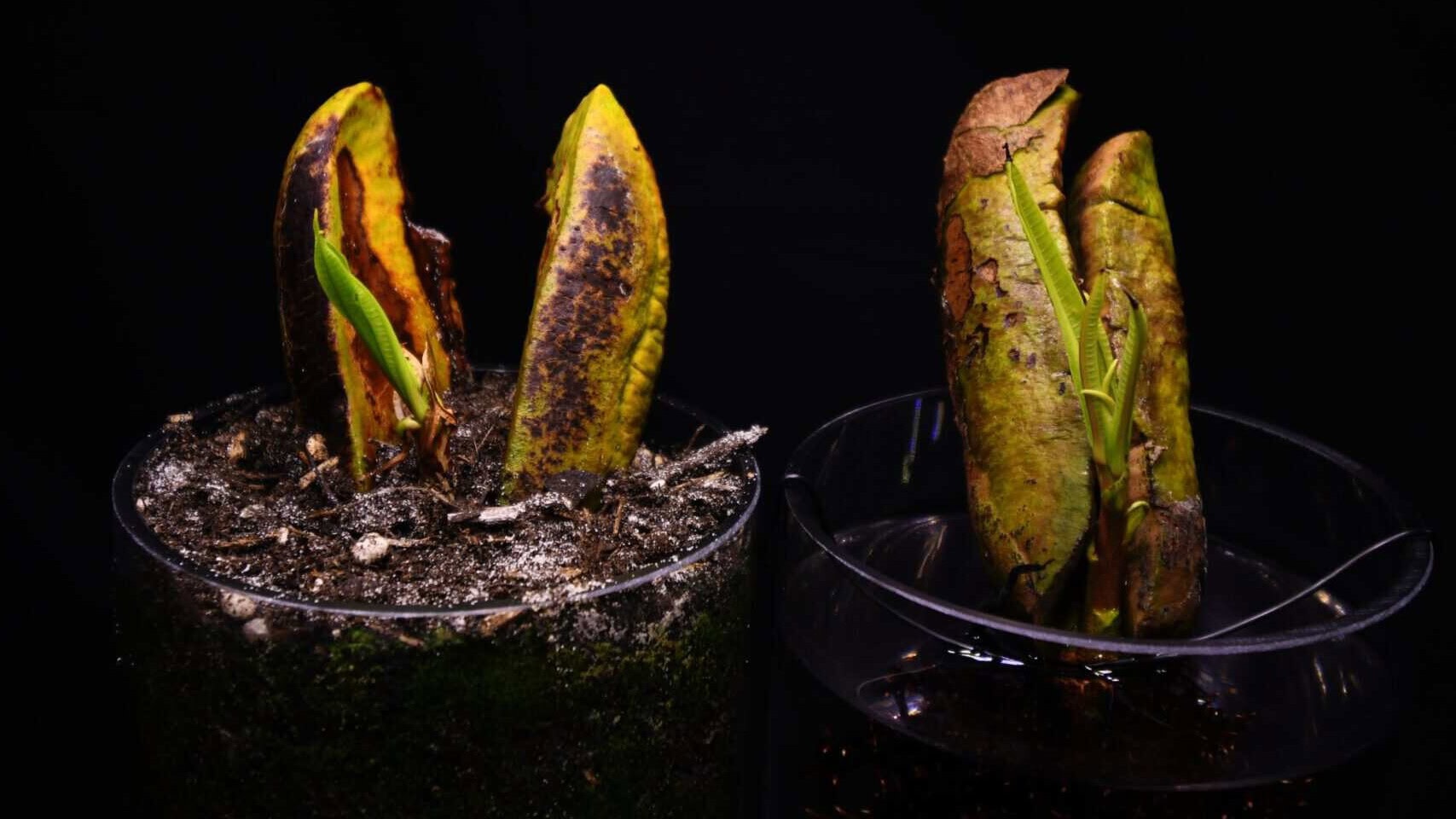
The first decision was how to start these precious seeds. To make it more interesting, I grew one seed in water and the other in soil to see which produced the healthier mango tree. It’s a question plant enthusiasts love to debate: start in water, where you can watch the roots develop, or in soil, which mimics the seed’s natural environment?
The water method
For the water-grown seed, I suspended it in a jar with the bottom half submerged and the top kept dry. This method is praised for giving a clear view of the root system as it develops – it’s oddly satisfying to watch those first roots reach out. I changed the water regularly to keep it fresh and oxygen-rich and to prevent bacterial growth that could harm the seedling.
The soil method
For the soil-grown seed, I used a well-draining mix of peat moss, perlite and compost – enough moisture retention to keep the seed hydrated while letting excess water drain to prevent root rot. I planted it just below the surface, snug but not buried too deep, and kept the soil consistently moist. This seed developed a strong early root system and a more natural growth habit.
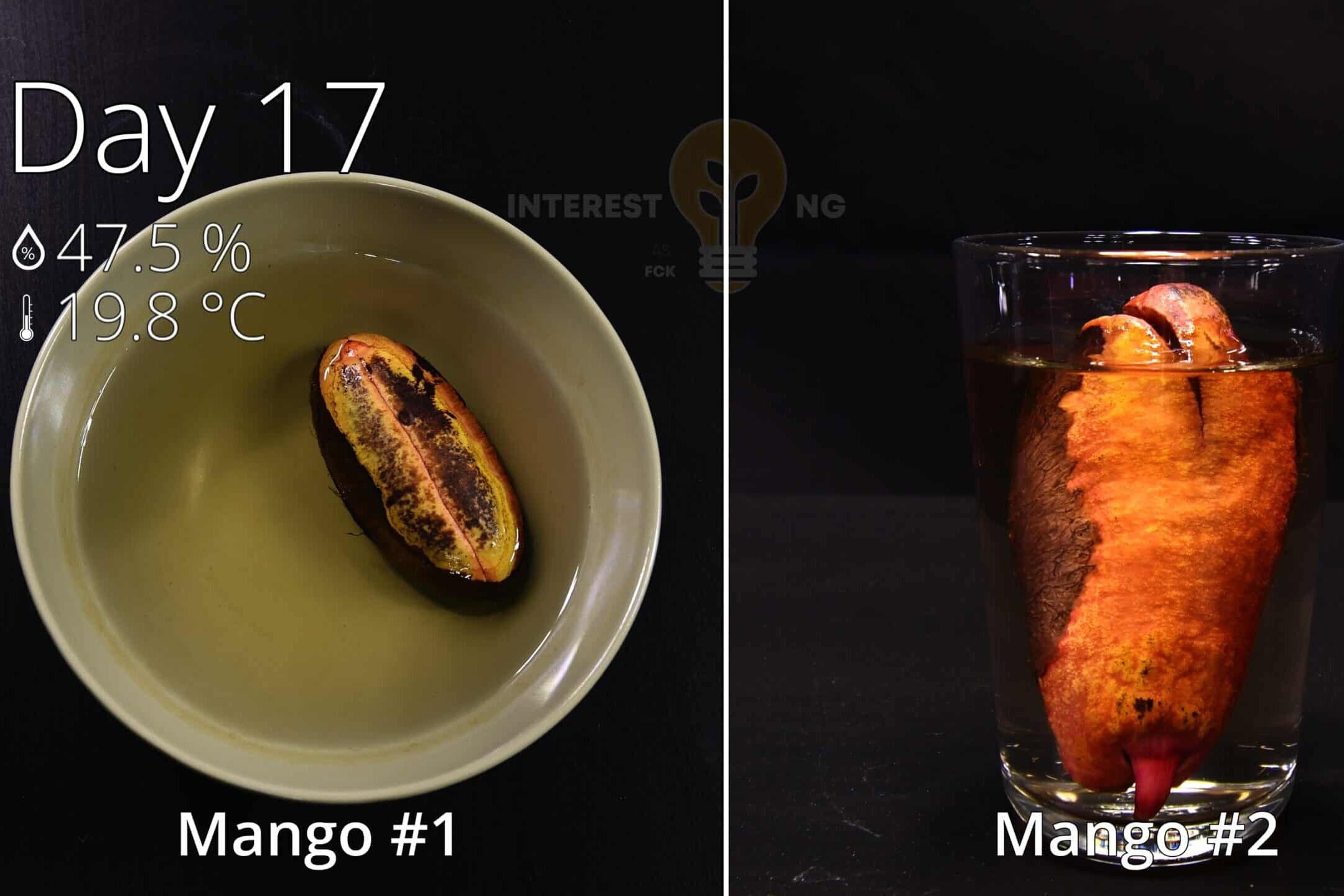
Above you can see the two white mango seedlings side by side – one started in water, one in soil. It’s a nice visual comparison of how the starting method influences the look and vigour of young plants.
What Went Wrong: The 24-Hour Light Mistake
I was keen to capture the whole journey – seed splitting open, first roots, first leaves. But not everything went to plan. The seedlings started promisingly, then began to struggle: leaves drooped and the vibrant green faded to a dull shade. For a while it looked like the project might fail outright, which stung after all the setup.
After some investigation, the culprit was my lighting. The 24-hour light cycle – meant to maximise growth for the timelapse – was actually stressing the young plants. Mango trees, like most plants, need a natural day–night rhythm. Constant light disrupted that and wrecked their health.
The fix: I switched to a natural schedule of 12–14 hours of light followed by darkness, and repotted into fresh soil. That made a world of difference. The leaves perked up, new growth appeared, and the seedlings recovered – even if the final footage wasn’t as “perfect” as I’d first imagined.
Growing Conditions for White Mango (Tips for Success)
If you want to grow a white mango from seed – for a timelapse or just the joy of a rare plant – getting the environment right saves a lot of frustration. Here’s what mango seedlings need.
Substrate
A mix of peat moss, perlite and compost gives a well-balanced base: peat retains moisture, perlite improves aeration, compost adds nutrients. If you’re using the water method, change the water regularly to keep oxygen levels up and prevent bacteria.
Temperature
White mangoes are tropical and like it warm: ideally 75–85°F (24–29°C). Below 60°F (15°C) growth slows and the seedling gets stressed. In a cool climate, a heat mat under the pot helps during colder months.
Light
Light is essential, but balance is key. Aim for about 12–14 hours of bright, indirect light a day, with a dark rest period. A grow light on a timer works well indoors. And – learn from my mistake – avoid 24-hour lighting, which overwhelms the seedlings.
Watering
Mangoes want consistent moisture, but overwatering is as harmful as underwatering. Water when the top inch of soil feels dry. With the water method, keep the water level just below the seed itself to prevent rotting.
Humidity
Mango plants enjoy a humid, tropical-style atmosphere. If your home is dry, mist occasionally or set a humidity tray (water and pebbles) nearby. Grouping plants together also nudges up the local humidity and keeps leaves from drying out.
Fertilization
As the seedling grows it needs more nutrients. A balanced, slow-release fertilizer every few weeks helps – start diluted and watch how the plant responds. Vibrant leaves and regular new growth mean you’re on track; brown tips or burnt-looking leaves mean you should cut the strength or frequency.
What Is a White Mango?
The white mango, sometimes called the “ivory mango,” is a rare and prized fruit, especially in parts of Southeast Asia. Unlike the common yellow or orange mangoes, it has pale, almost translucent flesh with a delicate, sweet flavour. That rarity makes it sought-after by enthusiasts and collectors.
Growing one from seed is a unique challenge. The seeds can be more sensitive than those of regular mangoes, which makes it all the more rewarding when it works. And like any mango grown from seed, it’s a long-term project: it can take years to reach fruiting (if at all), so enjoy the journey as much as the goal.
Lessons from the Timelapse Project
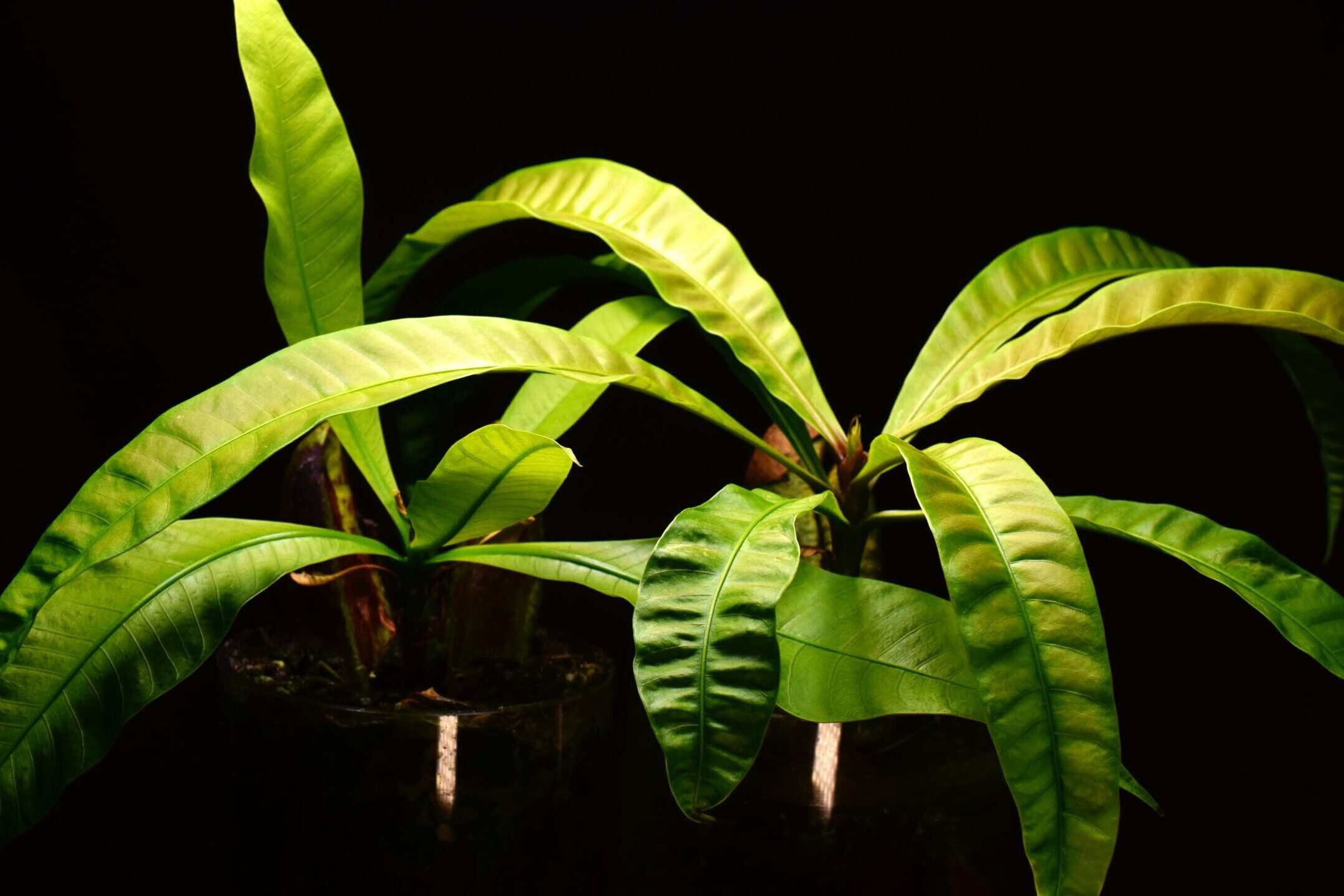
This project didn’t go exactly as planned, but it was a fantastic learning experience. Filming growth as a timelapse forces you to pay attention to every detail – light, temperature, watering – because any problem becomes glaringly obvious when you play it back in fast motion. A few things I’d pass on:
- Plan ahead – decide on your camera setup, light source and plant placement, and make sure the camera has a clear, stable view.
- Monitor regularly – check the setup daily; consistency matters and any disruption shows up in the final video.
- Be patient – it can take weeks or months to capture real growth.
- Adapt and learn – if something isn’t working (like my lighting), change it. Timelapse shows you the impact fast.
Want to film your own? Everything I use is in my Plant Time-Lapse Equipment Guide – camera, interval settings and lighting.
Frequently asked questions
It is a rare, pale-fleshed type of mango, sometimes called an ivory mango, prized in parts of Southeast Asia for its delicate sweet flavour. You grow it from seed the same way as any other mango.
Both work. Water lets you watch the roots develop, while soil gives a strong early root system and a more natural start. In this project I tried one of each.
Often too much light. A 24-hour light cycle stresses mango seedlings, fading and drooping the leaves. Give them about 12 to 14 hours of light and a proper dark rest period, and they usually recover.
Usually several years (often 5 to 8 or more), and indoor seed-grown trees may stay ornamental. Treat it as a long-term passion project rather than a quick route to fruit.
Further Reading on Mango Care
- Mango Growing in the Home Landscape – University of Florida (IFAS)
- Mango (Mangifera indica) – RHS plant profile
More Mango & Tropical Plant Projects
- How to Grow a Mango Tree from Seed – my full step-by-step grow guide for regular mangoes.
- Germinating a Mango Seed in Water – the water-method project, captured as a 157-day timelapse.
- Avocado Bonsai from Seed – another tropical supermarket seed turned tiny tree.