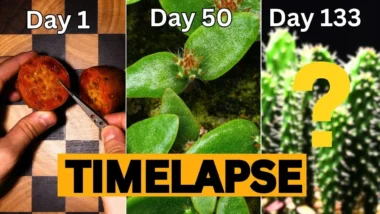
Ever looked at a juicy nectarine and thought: “Could I actually grow a nectarine tree from this seed?” The answer is yes – and it’s way more fun than throwing the pit in the trash. In this guide I’ll show you how to grow a nectarine tree from seed step by step, and you can watch the whole transformation in a 200-day timelapse from pit to young tree.
TL;DR – How to Grow a Nectarine Tree from Seed
- Eat a ripe nectarine and save the pit.
- Crack the pit and remove the inner seed.
- Cold-stratify the seed in the fridge for 6–8 weeks.
- Plant the germinated seed in a well-draining potting mix.
- Keep it warm (21–24°C), bright and evenly moist.
- Be patient – this is a long-term project, not a weekend hack.
This post walks you through every stage, shows the optimal growing conditions, and includes the full nectarine timelapse so you can watch your future tree grow in a couple of minutes.
Growing a Nectarine Tree from Seed: What to Expect
For this project I used a donut nectarine from the supermarket and turned its seed into a young nectarine tree. Is it the fastest way to get fruit? Nope. Is it a great long-term experiment and a fun way to learn about trees? Absolutely.
Quick reality check: a nectarine grown from seed may not be identical to the parent fruit, and it can take several years before it produces nectarines (if at all). So treat this as a nerdy gardening project, not an emergency fruit-production system. 😄
How to Grow a Nectarine Tree from Seed (Step by Step)
Step 1 – Prepare the nectarine seed
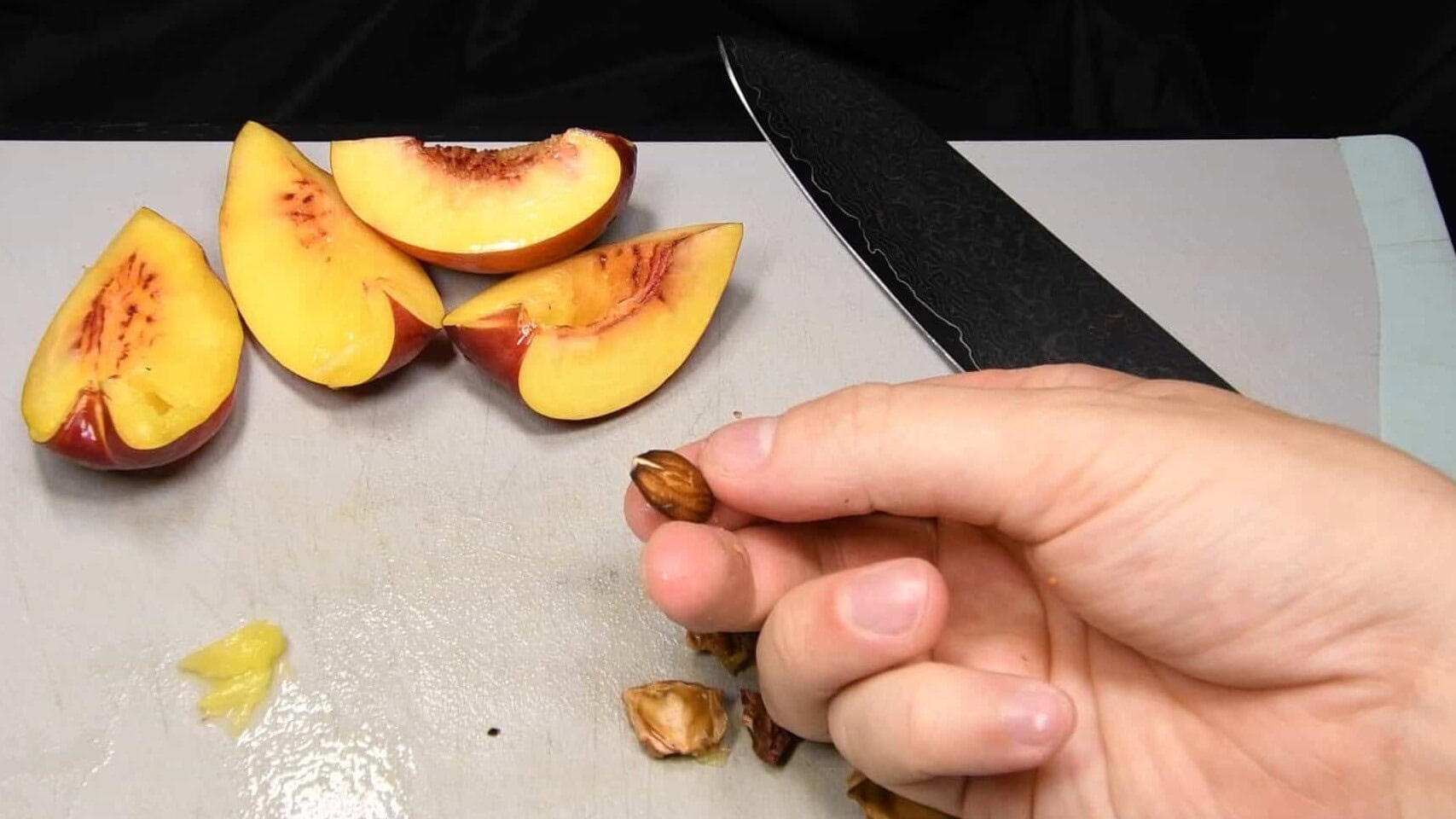
- Choose your fruit – start with a ripe, healthy nectarine. Enjoy the fruit (mandatory step) and keep the pit.
- Clean the pit – rinse off any remaining flesh and let it dry for a couple of days. This makes it easier to crack.
- Crack the pit – use a nutcracker, or carefully tap it with a hammer, to open the outer shell. Inside is the actual seed (it looks like an almond). Try not to damage it.
Step 2 – Cold-stratify the seed (mimic winter)
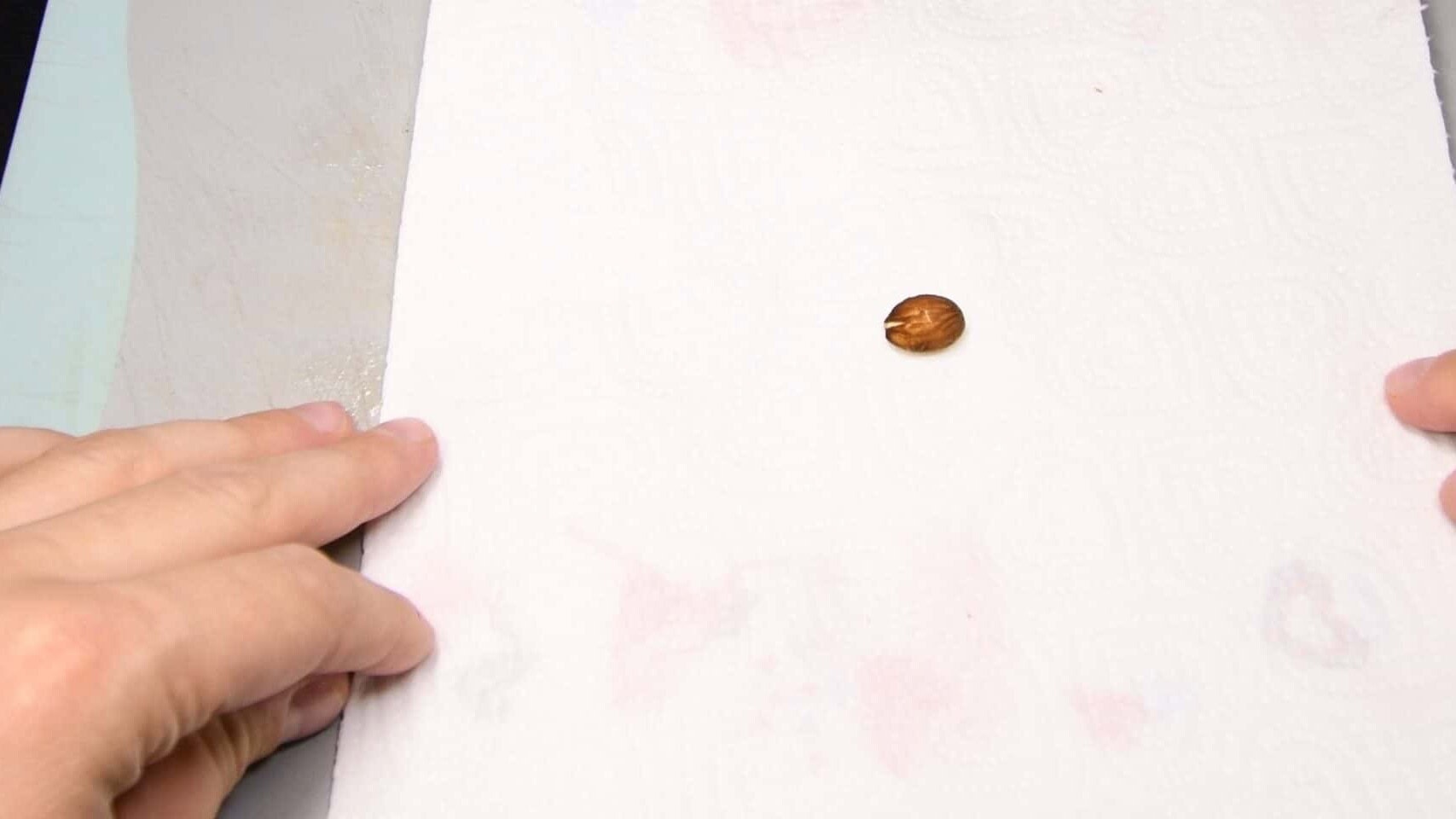
Nectarines, like many stone fruits, need a period of cold to “wake up” and germinate properly. That’s where stratification comes in.
- Prepare a moist paper towel – dampen it so it’s moist but not dripping.
- Wrap the seed – place the bare seed inside and fold the towel around it.
- Into the bag – put the wrapped seed in a ziplock bag or small container and label it (so you don’t mistake it for a strange snack later).
- Refrigerate – place the bag in the fridge (not the freezer!) for about 6–8 weeks. This cold period mimics winter and breaks the seed’s dormancy.
Check the seed every 1–2 weeks to make sure the towel is still moist and there’s no mold. Replace the towel if needed.
Step 3 – When the seed germinates
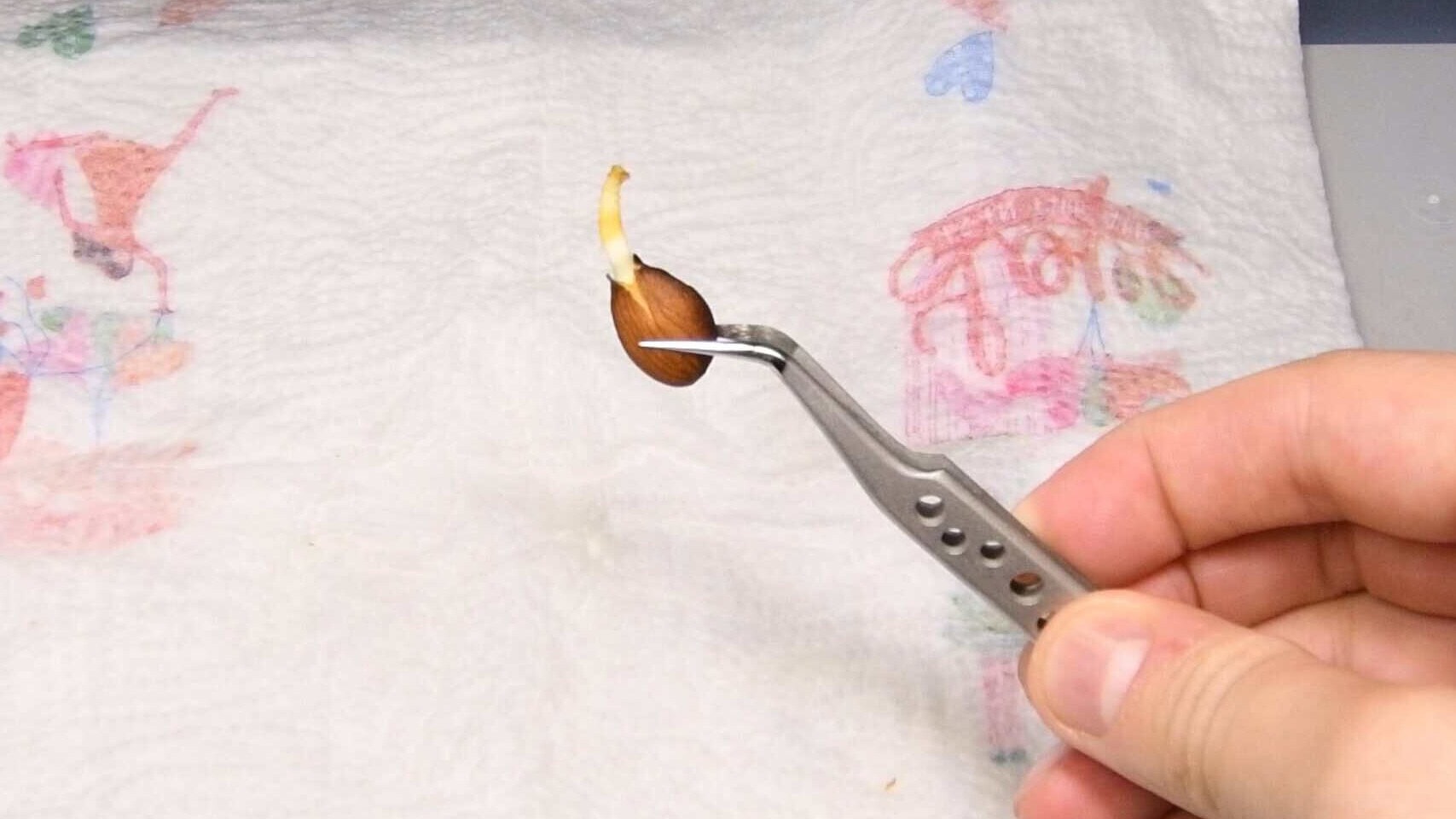
After a few weeks you should see the first root (radicle) emerging from the seed. That’s your green light to plant.
Step 4 – Plant the seed
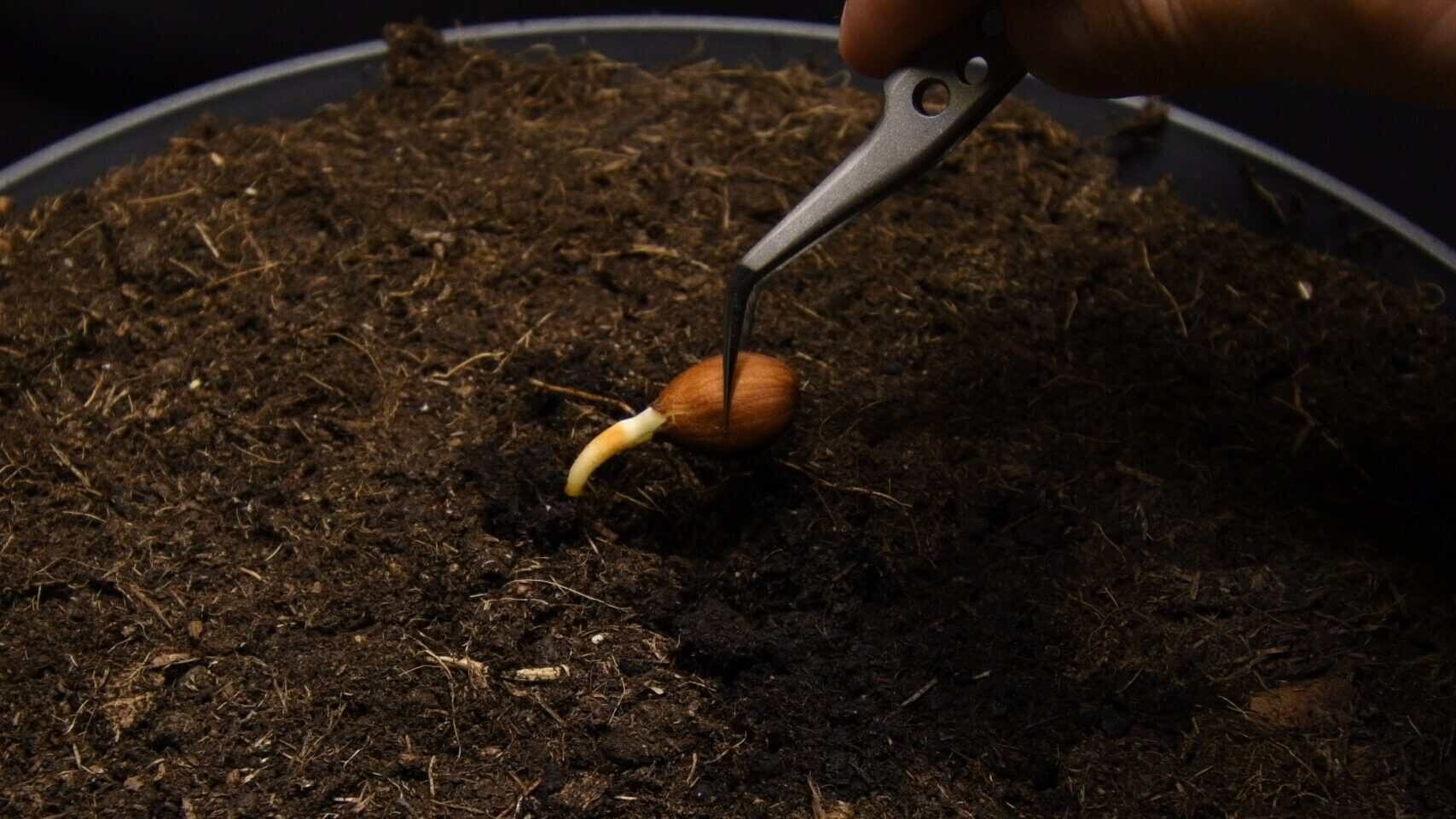
- Choose a pot and mix – a small pot with drainage holes and a well-draining potting mix. Compost with sand and peat or coco coir works well: loose, airy and rich in organic matter.
- Planting depth – plant the germinated seed about 2–3 cm (around 1 inch) deep, root pointing down. Cover gently with soil.
- First watering – water thoroughly so the soil settles around the root, but don’t turn the pot into a swamp.
Step 5 – Care for the seedling
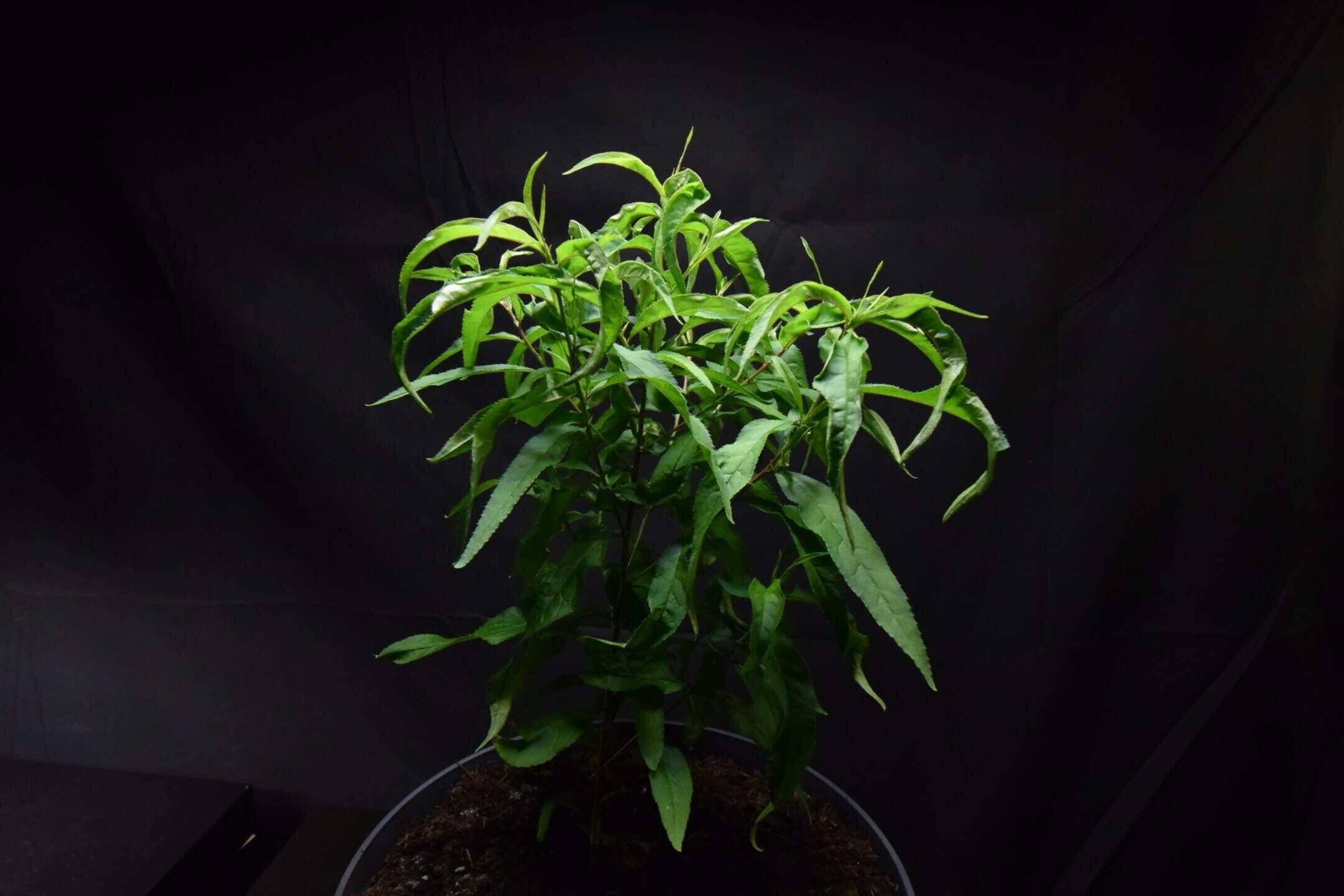
Now the fun part: watching your baby tree grow. This is the phase I captured in the 200-day timelapse – from first green shoot to a proper little nectarine tree.
- Temperature – nectarine seedlings like it warm, around 21–24°C (70–75°F). Avoid cold drafts and sudden swings.
- Light – give it 6–8 hours of direct sunlight a day. Indoors with limited light, a small LED grow light helps.
- Watering – keep the soil evenly moist but not waterlogged. Water when the top 2–3 cm feel dry. Too much = root rot; too little = sad, droopy leaves.
- Repotting later – as the tree grows, move it into a larger pot with fresh, well-draining mix so the roots have space.
Optimal Growing Conditions (Cheat Sheet)
A quick overview of the main conditions for growing a nectarine tree from seed successfully:
- Substrate: well-draining potting mix with organic matter (compost, sand, and peat or coco coir).
- Temperature: ideally 21–24°C (70–75°F) during active growth.
- Watering: moist but not soaked; increase in hot, dry weather.
- Light: at least 6–8 hours of direct sun (or a strong grow-light equivalent) per day.
Watch the 200-Day Nectarine Timelapse
If you want to see the whole process in a few seconds, here’s the full nectarine tree from seed timelapse. It shows the seed waking up after stratification, pushing out its first root and shoot, and slowly becoming a small nectarine tree.
Want to film your own seed-to-tree timelapse? Everything I use is in my Plant Time-Lapse Equipment Guide – camera, interval settings and lighting.
Frequently asked questions
Maybe, but it can take several years, and the fruit might differ from the original nectarine. Seed-grown trees are more of a fun experiment than a guaranteed copy of the parent fruit.
You will see a seedling within weeks of planting the germinated seed, but a real little-tree look takes months. In this project I captured about 200 days of growth in the timelapse.
Yes, if your climate suits nectarines and you harden the tree off slowly. Start in a pot, then move to a bigger container or outdoors once the tree is strong enough and your winters are not too harsh.
Yes. Nectarine seeds need roughly 6 to 8 weeks of cold and moisture to break dormancy. A labelled ziplock bag with a damp paper towel in the fridge does the job, mimicking winter.
Further Reading on Nectarines
- How to Grow Nectarines – Royal Horticultural Society
- Prunus persica (Peach & Nectarine) – NC State Extension
More Plant Projects You Might Like
- How to Grow a Mango Tree from Seed – another seed-to-tree project, tropical edition.
- Growing an Oak Tree from an Acorn – acorn to sapling in a 195-day timelapse (also cold-stratified).
- Grow a Chestnut Tree from Seed – turning chestnuts into a mini forest.