TL;DR – Regrow Vegetables from Scraps
- Yes, you can regrow vegetables from scraps like celery, lettuce, scallions and carrot tops – mostly for fresh greens, not full-size veggies.
- Start the scraps in water to trigger roots and leaves, then move them into soil for longer-term harvests.
- Keep them in bright light, evenly moist soil and mild temperatures for best results.
- It’s a fun, low-cost, zero-waste experiment – perfect for kids, beginners and balcony gardeners.
- I filmed the whole thing as a 45-day regrow timelapse; the video is embedded below.
How to Regrow Vegetables from Scraps (Does It Really Work?)
We’ve all seen those viral “magic kitchen hacks” that promise endless veggies from a single scrap. But can you actually regrow vegetables from kitchen scraps, or is it just clickbait? I wanted to know too – so instead of trusting a hack, I ran it as a proper experiment and filmed the whole thing as a 45-day timelapse.
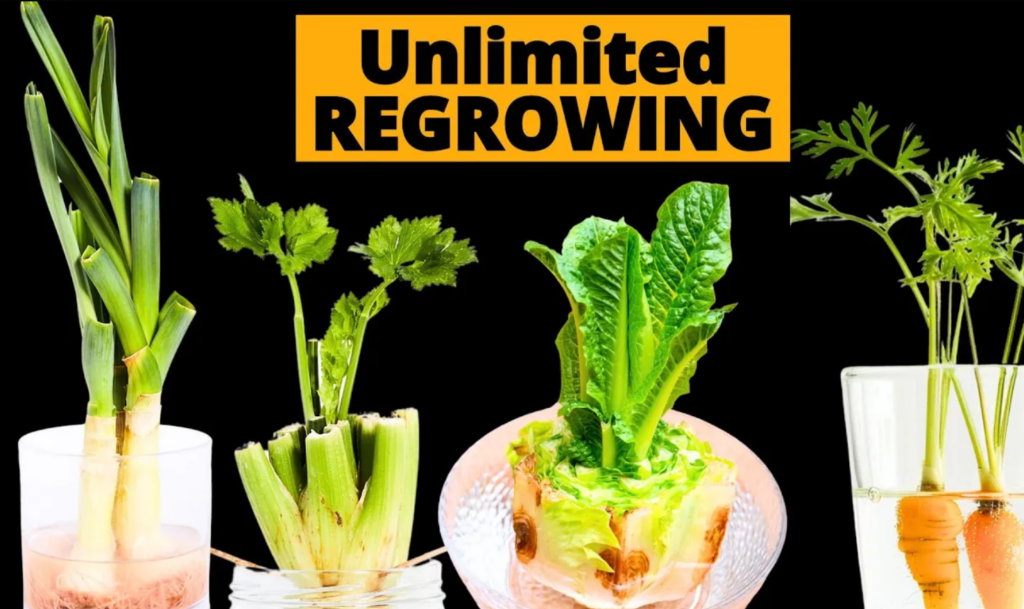
In this tutorial we’ll regrow celery, lettuce, scallions and carrots from leftovers you’d normally throw away. I’ll show you step by step how I did it, what worked, what didn’t, and how the plants looked after several weeks.
What You’ll Need
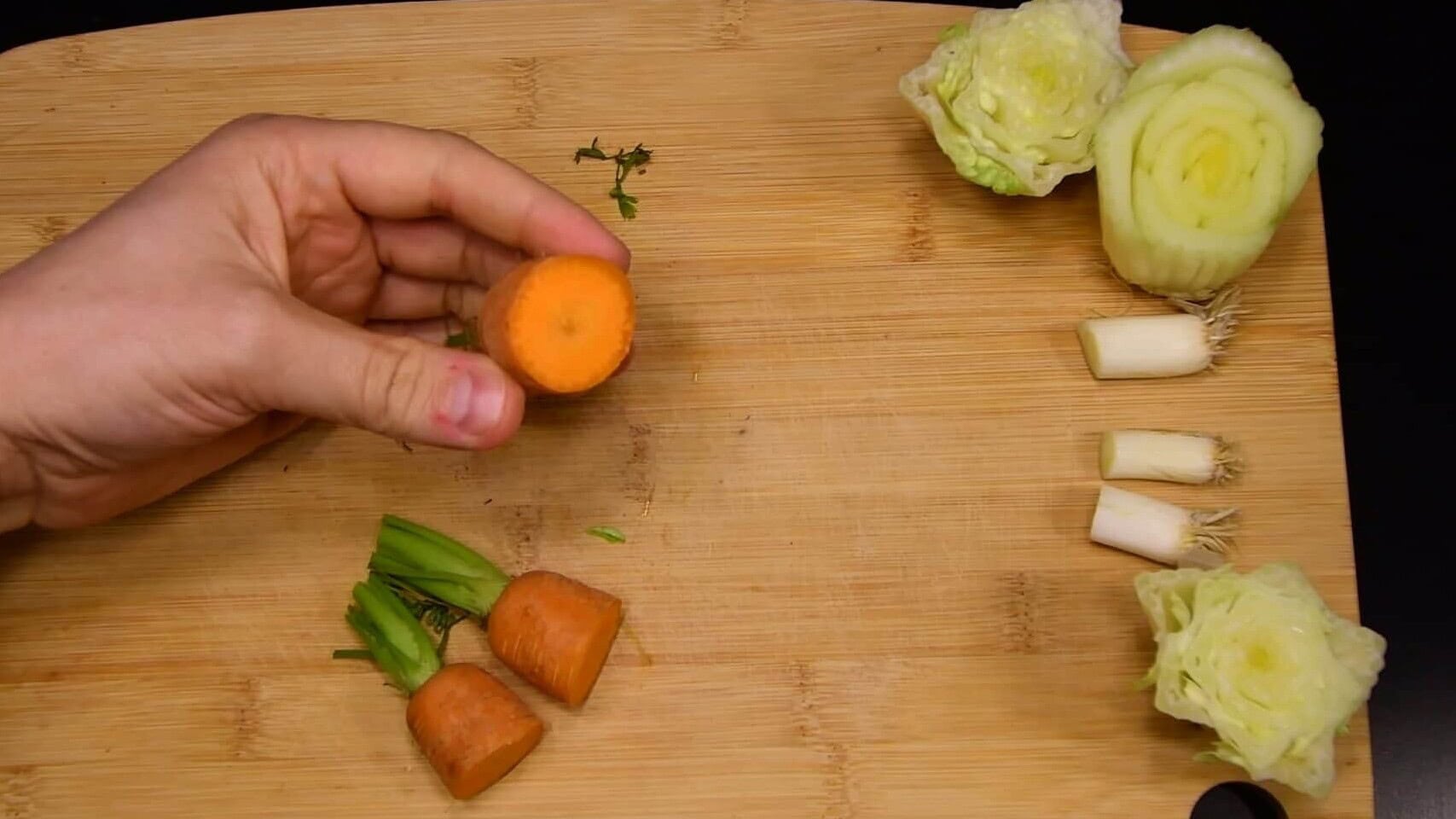
You only need a small shopping list and some kitchen leftovers:
- Celery base (the bottom 3–4 cm with the stalks cut off)
- Lettuce stump (e.g. romaine heart or head-lettuce core)
- Scallions / spring onions (white part with roots)
- Carrot tops (1–2 cm of the top with the leaf area)
- Shallow bowls or jars, water, and later a pot with potting soil
Other vegetables that often regrow from scraps include beetroot, other leafy lettuces, onions, pak choi, garlic and ginger. Once you understand the basic method, you can experiment with those too.
How to Regrow Vegetables from Scraps, Step by Step
Step 1: Start the scraps in water
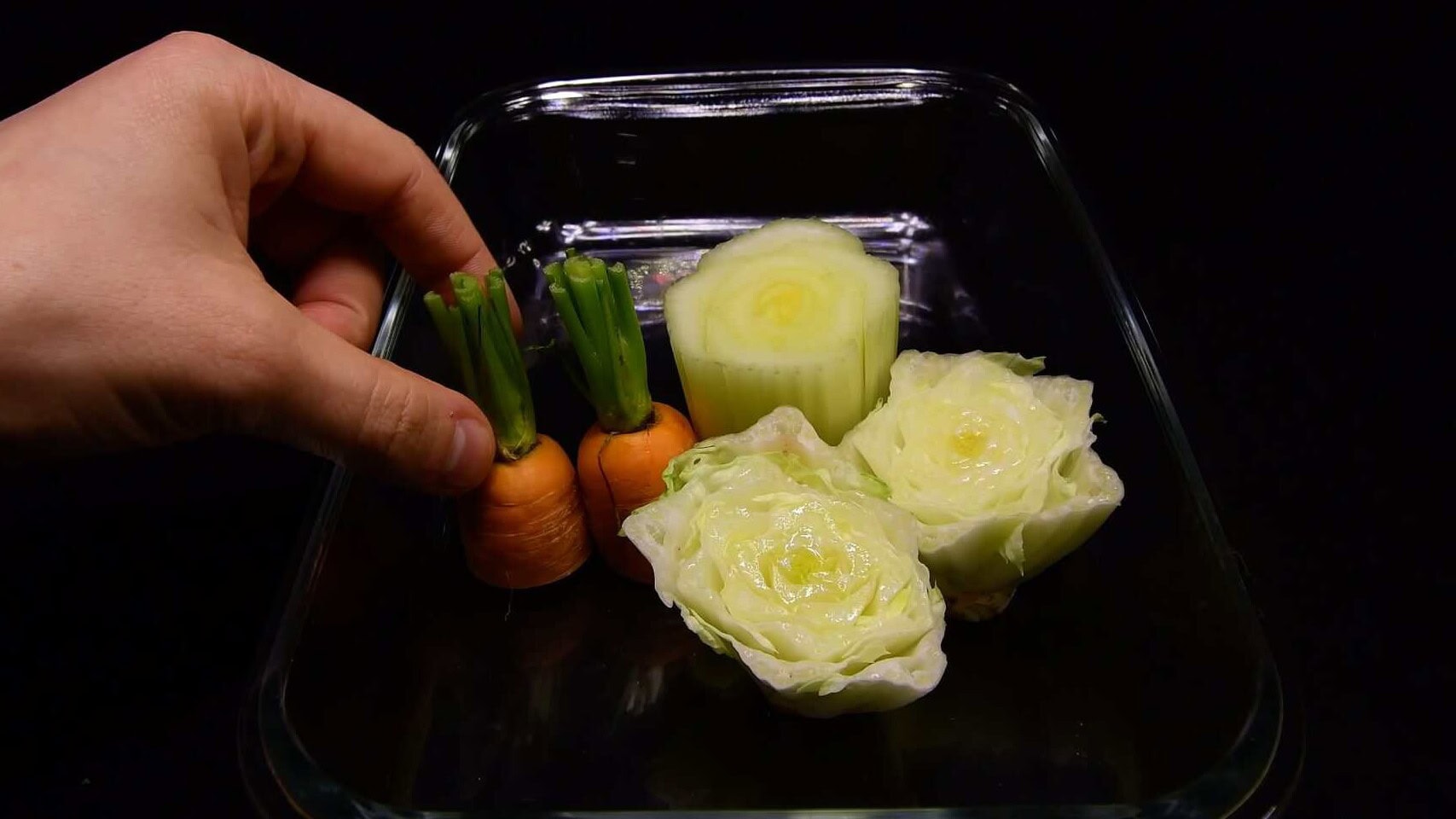
- Cut the edible parts off, leaving the bottom or root section intact. For carrots, keep only the top slice – you’ll regrow fresh greens, not a new root.
- Place the scraps in a shallow bowl or jar with the cut side up, roots down.
- Add just enough water to cover the root area (the bottom 0.5–1 cm).
- Top up or change the water every day or two so it stays fresh.
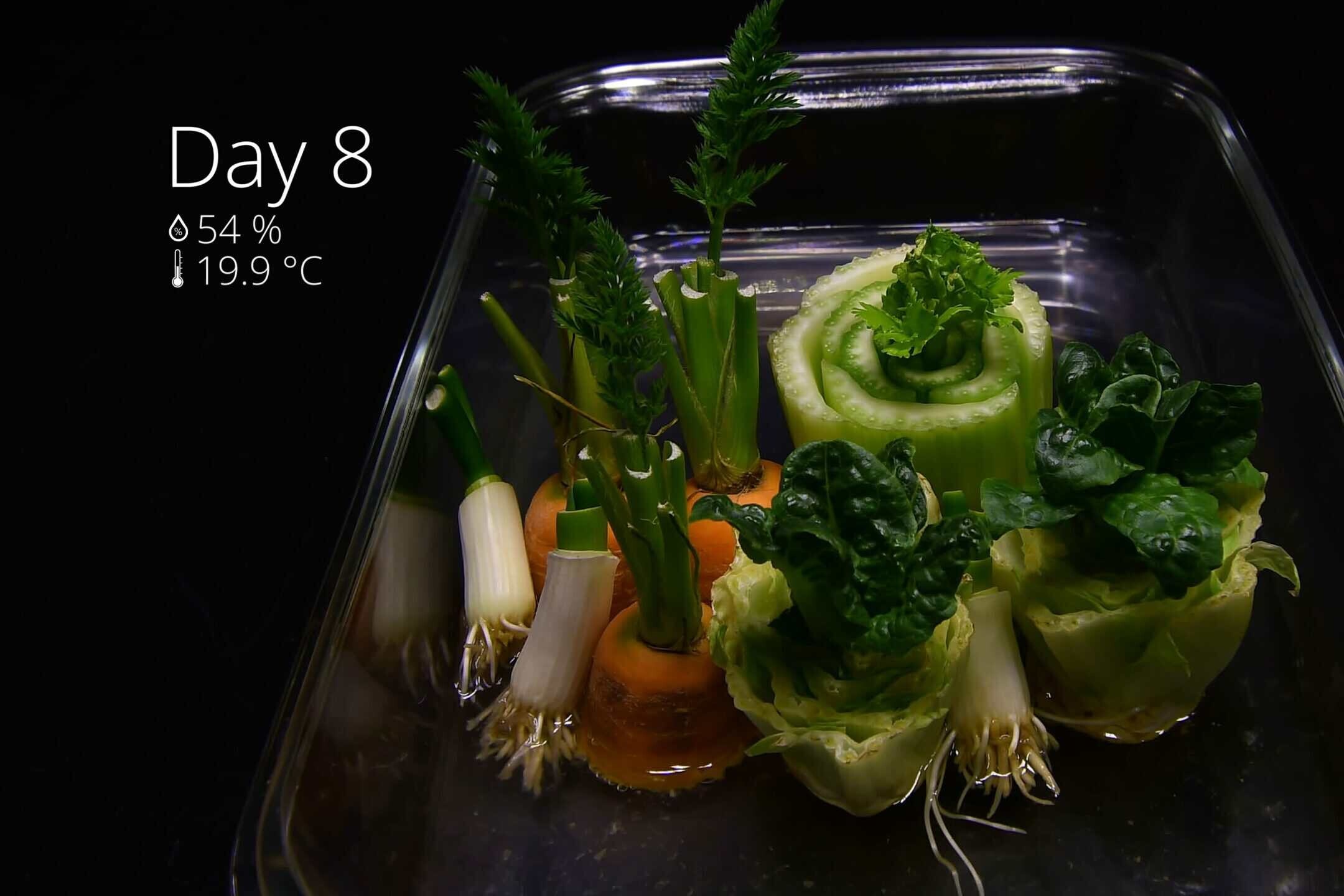
After a couple of days you’ll usually see tiny roots and pale new shoots forming. It looks a bit like zombie vegetables coming back to life – in a good way.
Step 2: 8 days later – lots of new growth
Within about a week, things get exciting. The white, blanched parts turn green and start photosynthesizing, and you’ll see clear differences between the species:
- Celery: new stalks appear from the centre of the base.
- Lettuce: fresh leaves form in a rosette where the old head was cut off.
- Scallions: green tops shoot up fast – these are the quickest win.
- Carrots: feathery carrot greens grow from the top slice.
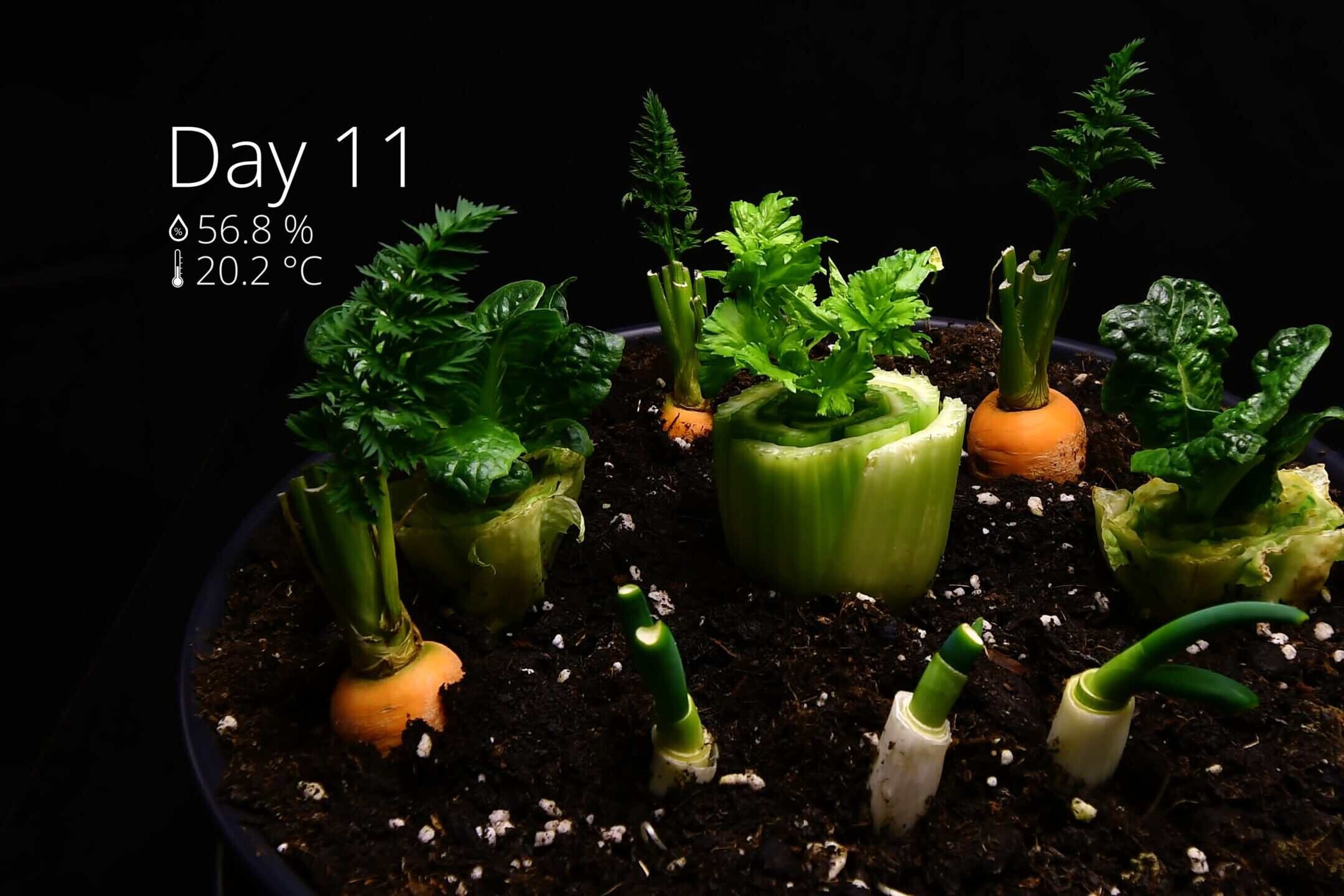
Once the roots are a few centimetres long and the tops look strong, it’s time to transplant your regrown vegetables from water to soil. This gives them access to more nutrients and makes them much more stable.
Step 3: Pot up – regrowing in soil
Fill a pot or planter with loose, humus-rich potting soil. Make a small hole for each scrap, set the roots into the soil and gently firm it around the base. Water thoroughly once after planting.
- Celery & lettuce – plant the base just deep enough so the cut surface sits at soil level.
- Scallions – bury the white part and roots, leaving the green tops above soil.
- Carrot tops – press the slice lightly into the soil; you’re growing decorative greens and herbs, not new roots.
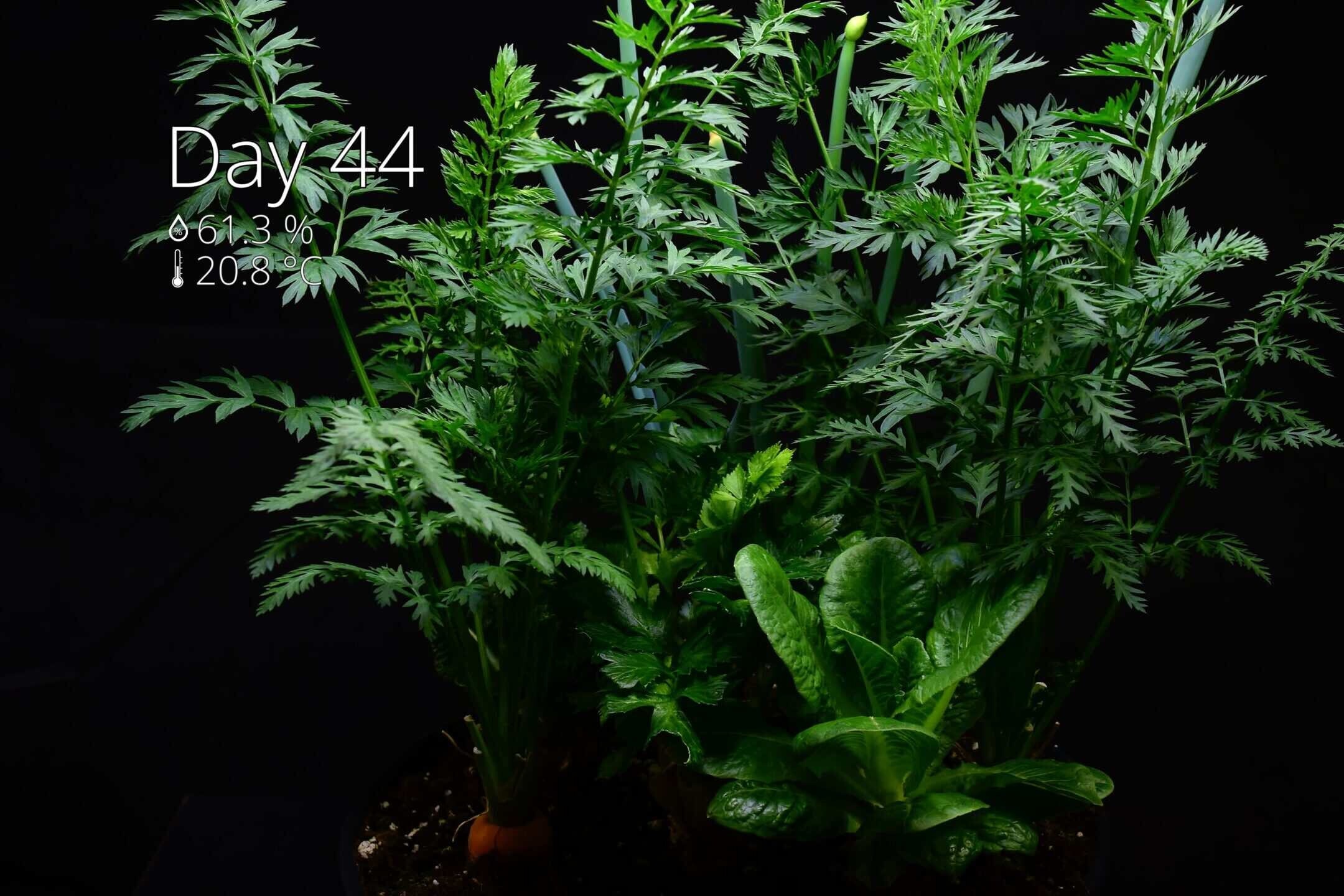
Over the next few weeks the regrown vegetables filled the pot with fresh leaves – perfect for snipping into salads, soups and garnishes.
45-Day Regrow Timelapse
To document everything, I filmed the whole experiment as a 45-day timelapse. You can literally watch the scraps wake up, root, and turn into a mini balcony garden:
Want to record your own? Everything I use is in my Plant Time-Lapse Equipment Guide – camera, interval settings and lighting.
What Worked Best (and What Didn’t)
So, does regrowing vegetables from scraps really work? Here’s what I found:
- Scallions: clear winner. Harvest the green tops and let them regrow several times.
- Celery: regrows a smaller version of the original – great for cutting celery leaves and young stalks.
- Lettuce: regrows a loose head, not a full supermarket-sized one. Perfect for a few sandwiches or garnish.
- Carrots: only the carrot greens regrow, not the orange root – but the greens are edible and nice in pesto or salads.
In short: regrowing vegetables from scraps works, but mostly for endless greens rather than full replacement vegetables. Still, it’s a fun zero-waste experiment and a great way to get more out of your groceries.
Care Conditions: Soil, Temperature, Watering & Light
To keep your regrown veggies happy after transplanting, focus on these basics:
- Soil: a peat-free, humus-rich, well-draining mix. Adding compost gives a nutrient boost after starting in plain water.
- Temperature: most leafy vegetables prefer a mild range of about 60–75°F (15–24°C). Avoid frost and extreme heat.
- Watering: keep the soil evenly moist but never waterlogged. Water when the top 2–3 cm start to feel dry.
- Light: a bright windowsill with at least 6 hours of indirect to direct light per day. Short on sun? Add a small LED grow light.
With these conditions your regrown scraps stay productive much longer, and you’ll get several small harvests from what was basically trash.
Frequently asked questions
Yes, but mostly for fresh greens. Scallions, celery leaves, loose lettuce and carrot tops regrow well; you usually will not get a full-size replacement vegetable.
Scallions (spring onions) are the easiest and fastest. Celery, lettuce and carrot tops also work well. Onions, garlic and ginger are worth trying once you know the method.
Water gets roots started and is fine for a quick green snip. Moving them to soil gives more nutrients, so the plants stay productive longer and give you repeated harvests.
No. Only the leafy carrot greens regrow, not a new orange root. The greens are still edible and taste great in pesto or salads.
Further Reading on Regrowing from Scraps
- Regrowing Fruits and Vegetables from Scraps – University of Maryland Extension
- Growing Vegetables from Scraps – NC State Cooperative Extension
More Plant Projects You Might Like
- How to Grow Lettuce from Seed – grow a full head from scratch, not just a regrown stump.
- Growing Tomatoes from Seed – seed-to-harvest with a full timelapse.
- Growing Broccoli from Seed – another beginner-friendly veggie timelapse.