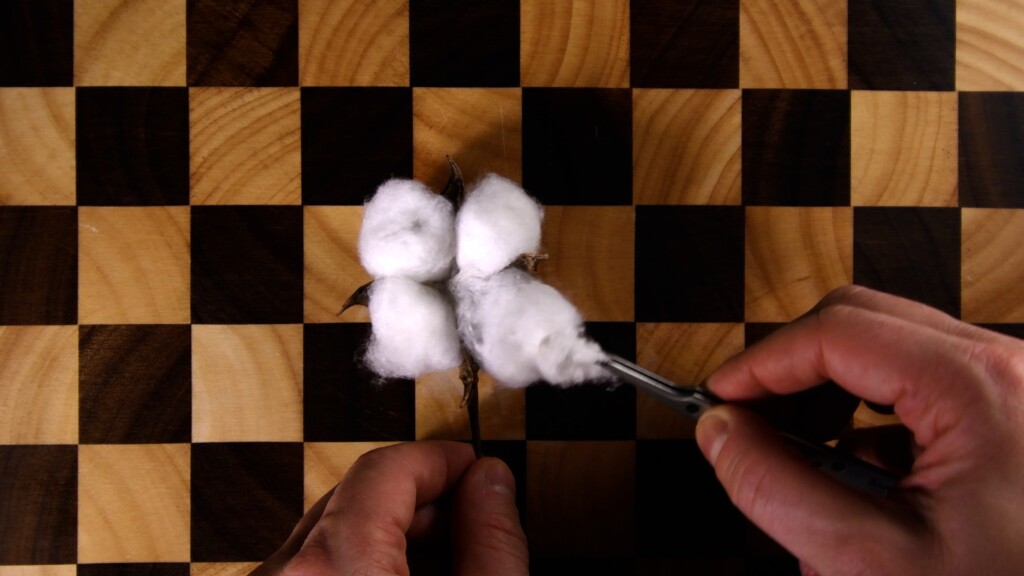
The T-shirt you are wearing started its life looking like this. Not as fabric, not as thread — as a fluffy white puff growing out of a pod on a plant. I wanted to see the whole thing happen with my own eyes, so I decided to grow cotton from seed indoors: no sun, no field, just a grow light and a lot of patience. About ten months later, a pod cracked open like a tiny explosion of fluff. Here is exactly how it went, with the substrate, water, light and feeding that got there, and the full day-by-day timeline.
The seed is wrapped in the very thing we harvest
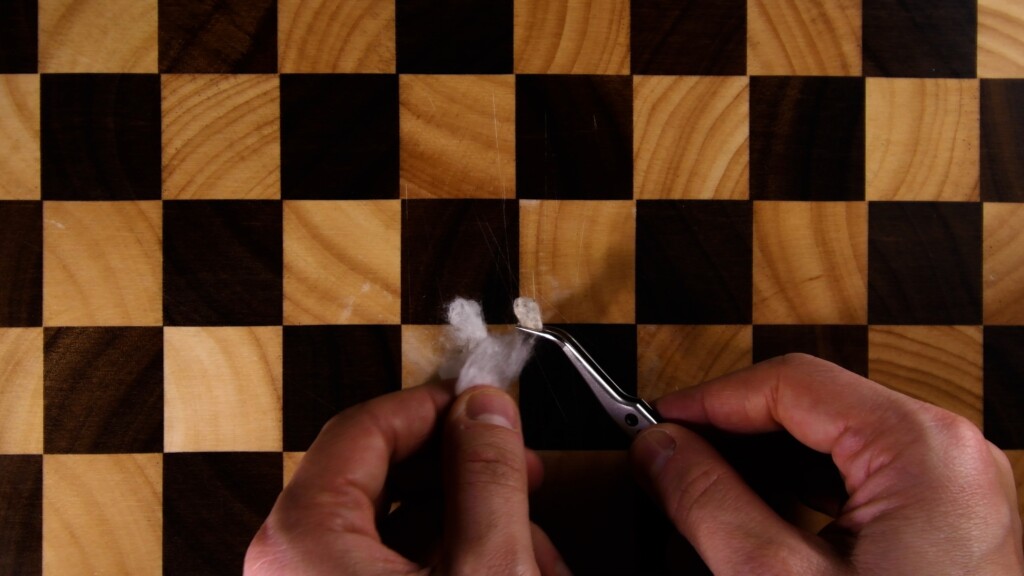
Here is the strange part: to get the seed, you have to dig it out of the cotton itself. Each fibre is attached directly to a seed — the fluff is the seed’s packaging. Separating them by hand is genuinely fiddly; the fibres cling as if they were glued on. That exact problem is why the cotton gin was such a big deal historically: pulling seed from fibre by hand is slow, miserable work. For one plant, though, tweezers and patience are all you need.
The right substrate for cotton
Cotton is a warm-climate plant with a deep taproot, so it wants a substrate that drains freely and never stays waterlogged. A loose mix of coco coir or quality potting soil with a generous amount of perlite works well — you want it airy, not dense. Cotton is fairly relaxed about pH, happy anywhere from mildly acidic to mildly alkaline (roughly 5.8 to 8.0), which makes it forgiving for a first attempt. The one thing it will not tolerate is soggy roots, so always use a pot with drainage holes and pick a deep one to give that taproot room.
Sowing the seed
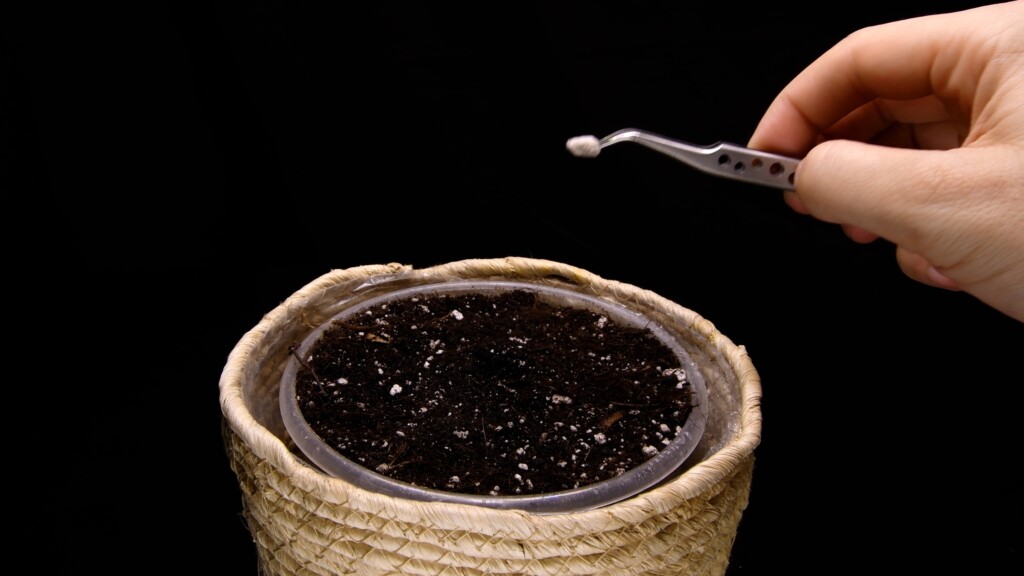
Sow the seed about one to two centimetres deep, cover lightly and firm the surface. Cotton germinates on warmth — it is a heat-loving plant, and cool substrate will leave you staring at bare soil for a long time. Keep it warm and consistently moist and give it its first proper drink right after sowing. Then the hard part begins: waiting.
Watering: warm, moist, never soggy
Cotton likes steady moisture without ever sitting in water. Let the top of the substrate dry slightly between waterings, then water deeply at the base until it drains through. In this grow the plant sat at a comfortable room temperature throughout — mostly around 22 to 24 °C — with moderate humidity in the 40 to 60 % range, and that suited it fine. Ease back a little as the plant matures and the bolls ripen; too much water late on can make the pods rot instead of opening cleanly.
Light and temperature
This is where cotton is demanding. It is a sun-worshipper that evolved in hot climates, so it wants as much strong light as you can give it and steady warmth. The good news, and the whole point of this experiment, is that it does not actually need the sun — this entire plant was grown under a grow light. Give it bright light for many hours a day and keep it warm (comfortably into the low-to-mid twenties Celsius) and it will keep pushing out leaves. Cold is the enemy; cotton simply stalls when it gets chilly.
Feeding for leaves, then for bolls
Cotton has a long season and a two-phase appetite. Early on it is building a whole plant, so it wants nitrogen to drive that leafy growth. Feed every few weeks with a balanced fertiliser through the vegetative stage. Once flower buds appear, shift the emphasis towards potassium and phosphorus — those are the nutrients that support strong flowering and, crucially, plump, well-filled bolls. Piling on nitrogen once the plant is flowering just gives you more leaves at the expense of the fluff you are actually after.
Germination and the long leafy wait
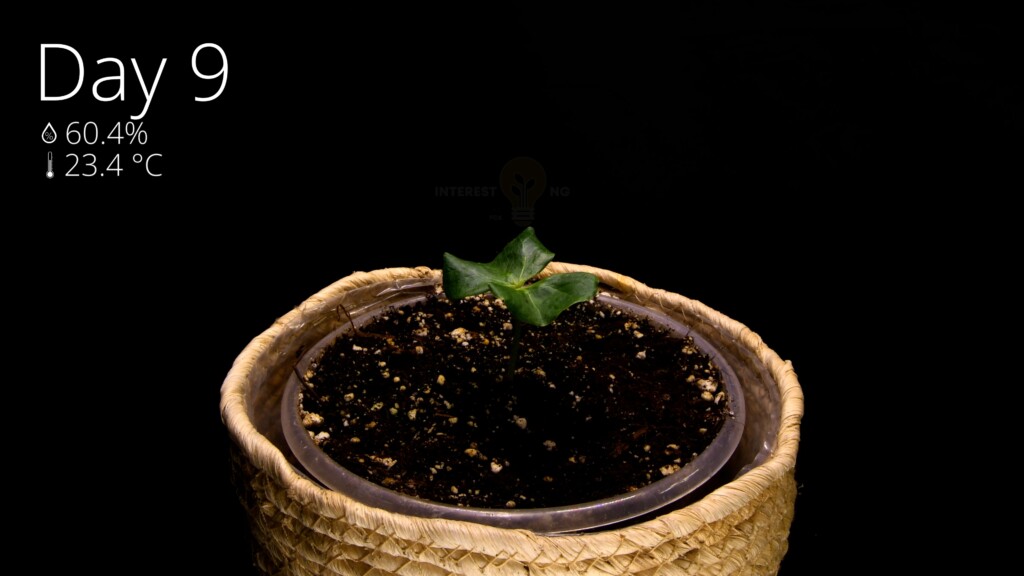
By day 9 the first sprout had pushed through. From there it just kept going — leaf after leaf, honestly faster than I expected for a plant with such a long road ahead.
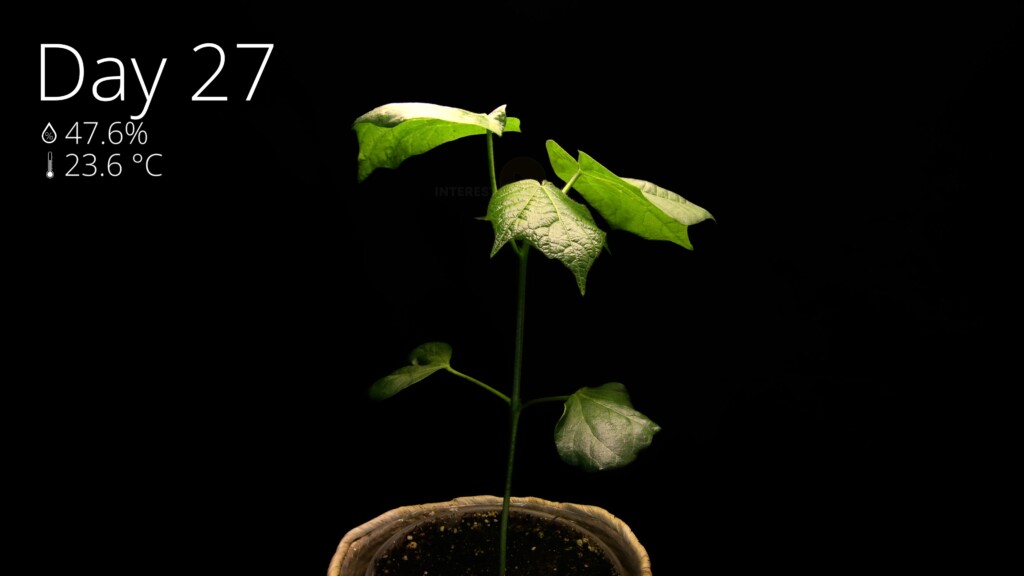
By day 27 it looked like a perfectly ordinary houseplant. And for weeks, that is exactly what it stayed — green, leafy and giving nothing away.
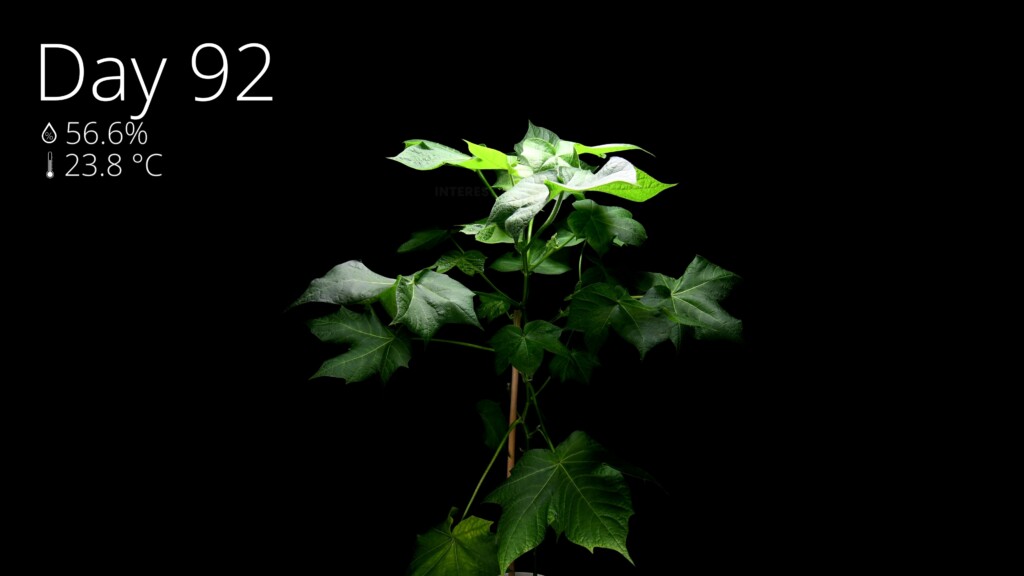
By day 92 — three whole months in — it was a proper bush, tall enough to need a support stake, and still not a flower in sight. This is the part nobody warns you about: cotton makes you wait. The plant had no idea how impatient I was; it just grew at its own pace.
Squares: the buds before the flowers
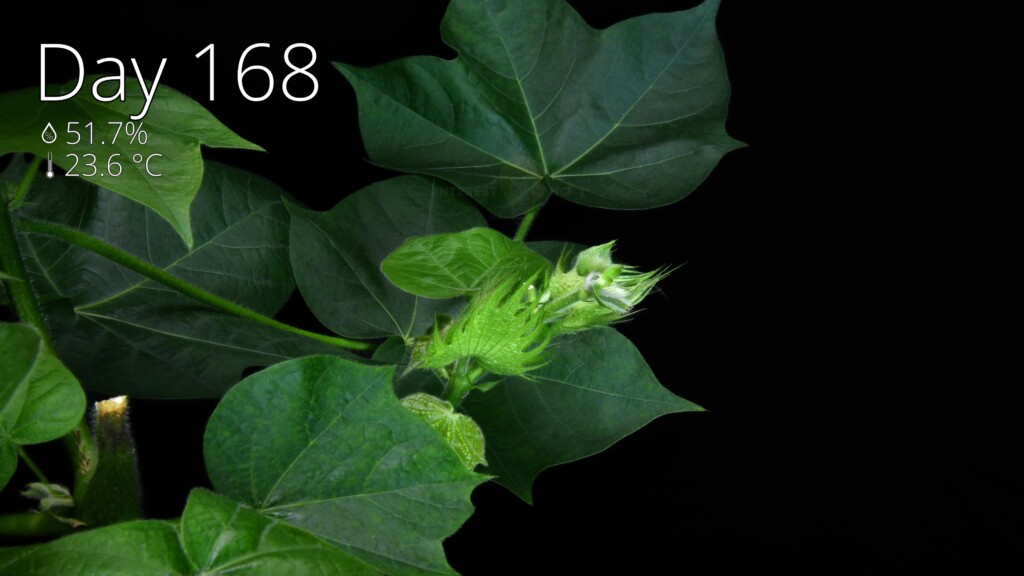
Then, around day 168, it finally happened: a small, spiky green bud. Cotton growers have a lovely name for this — a square. It is the pyramid-shaped bud that appears before the flower opens, wrapped in three little leafy bracts. After nearly six months of leaves, seeing the first square felt like the plant had finally decided to get to the point.
The flowers (and their colour-changing trick)
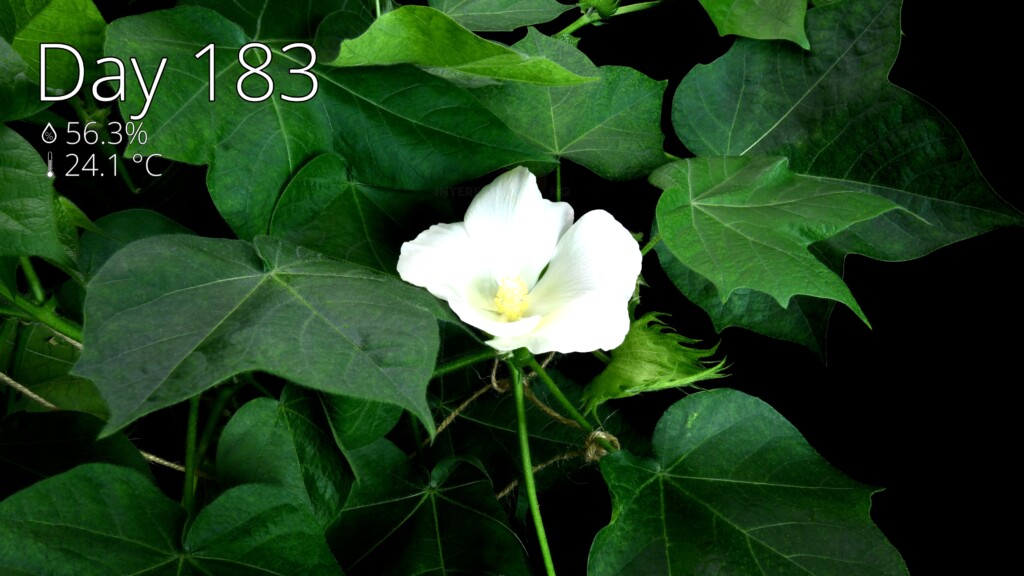
By day 183 the squares opened into real cotton flowers — and they are genuinely pretty, big pale hibiscus-like blooms. That family resemblance is no coincidence: cotton belongs to the mallow family, the same group as hibiscus and okra. Here is the fun bit — a cotton flower is a one-day show that changes colour. It opens creamy white, then over the next day or two it blushes pink and finally red before it drops. If you catch the plant at the right moment you can see white and pink flowers on it at once.
From flower to boll
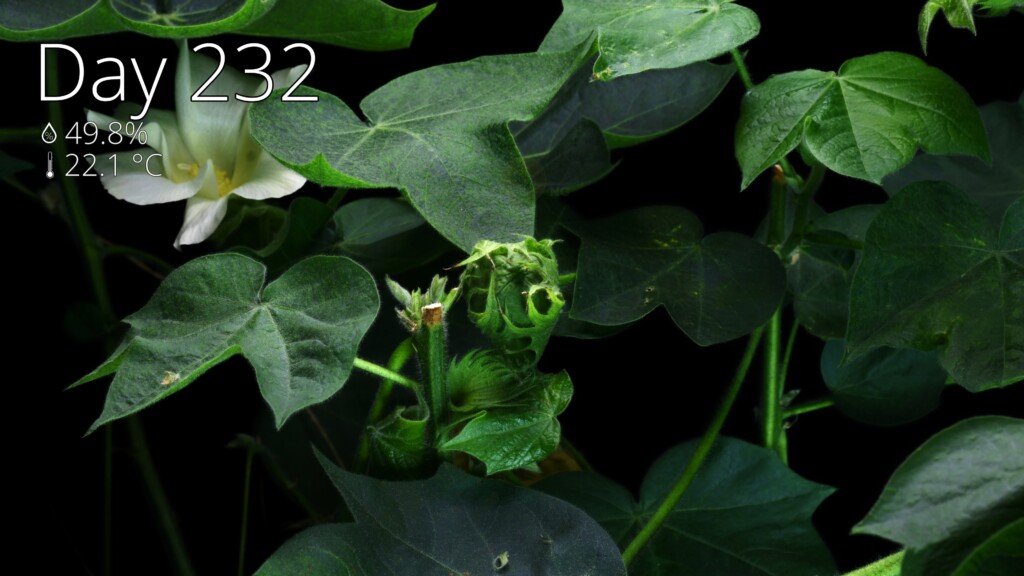
After each flower dropped, something odd started to swell in its place: a firm green pod called a boll. By day 232 the bolls were growing visibly, each one packed with seeds and the fibre wrapped around them. Inside that hard green shell, the cotton was quietly forming.
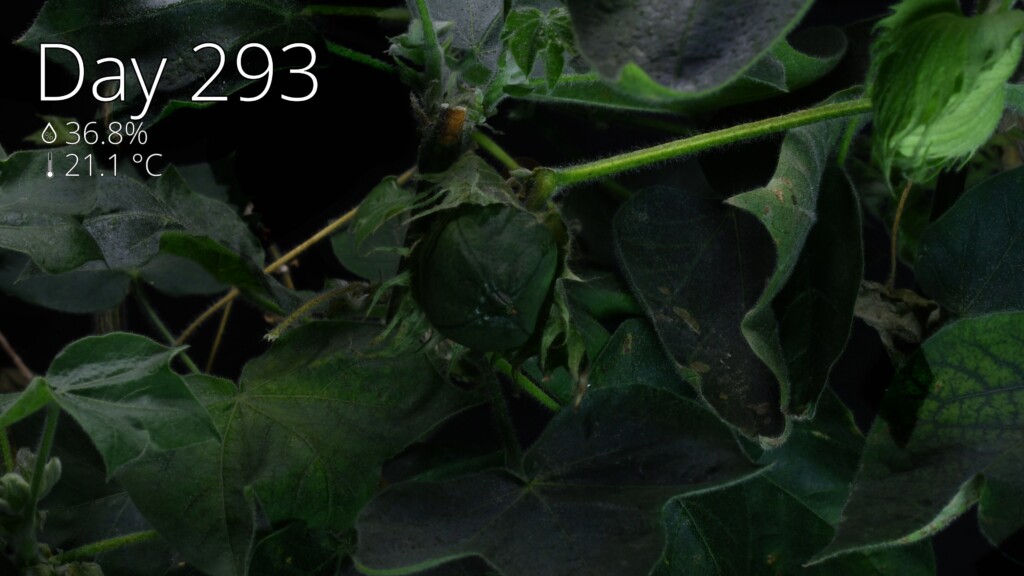
By day 293 the bolls were full-sized and starting to firm up and dry. This late stretch is a test of nerve — the pods just sit there looking closed for weeks. But they were about to do the one thing this whole project was for.
The boll bursts open
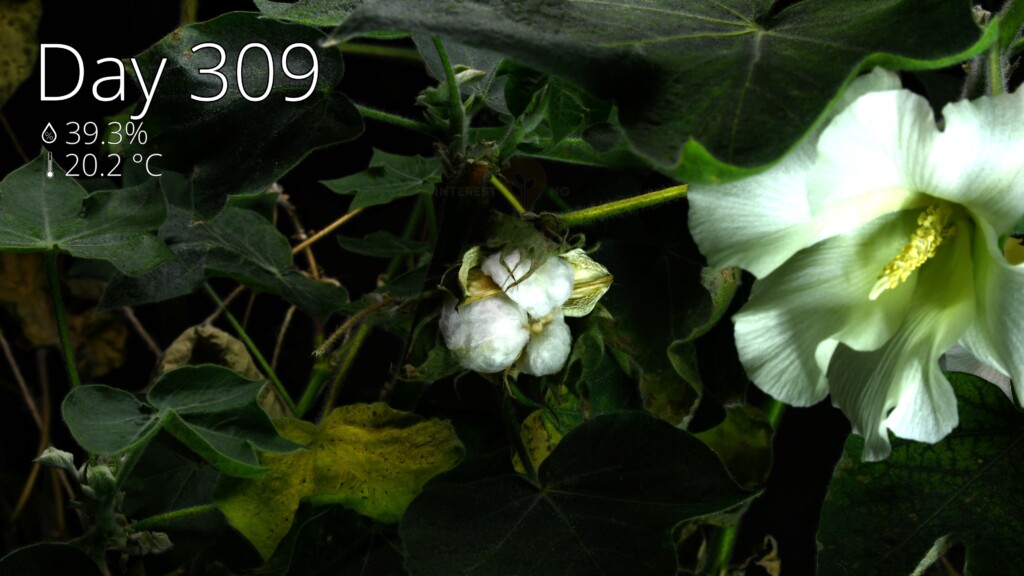
And then, around day 309, it opened. The dried boll split along its seams and pushed out a puff of pure white fluff — like a tiny explosion in slow motion. That is real cotton, grown from a single seed under a grow light. Technically, I could make a shirt now. A very, very small shirt.
Watch the full timelapse
Ten months from a single seed to a burst of fluff, compressed into one timelapse.
Frequently asked questions
How long does cotton take to grow from seed?
Cotton is a long-season plant. In this grow the seedling emerged by day 9, the first flowers opened around day 183, and the first boll cracked open near day 309 — roughly ten months from seed to fluffy cotton.
Can you grow cotton indoors without sun?
Yes. This entire plant was grown under a grow light with no direct sunlight. Cotton mainly needs strong light for many hours a day and steady warmth in the low-to-mid twenties Celsius; a good grow light supplies both.
Is it legal to grow cotton at home?
It depends where you live. In much of Europe, including Germany, cotton is fine to grow as an ornamental. In many cotton-producing US states, however, even ornamental cotton is regulated under the Boll Weevil Eradication Program and may require a permit or be prohibited — so check your local Department of Agriculture before planting.
What is a cotton boll?
A boll is the seed pod that forms after a cotton flower is pollinated and drops. It grows as a firm green capsule, then dries and splits open to reveal the white fibre and seeds inside — the part we harvest as cotton.
One seed, one very small shirt
Ten months, one grow light and a lot of patience turned a single fluff-wrapped seed into real, spinnable cotton. It is one of the few plants where you can hold the raw material of your own clothes in your hand and think, huh, so that is where it comes from. So tell me — how many bolls do you reckon it would take to actually spin enough thread for one real T-shirt?