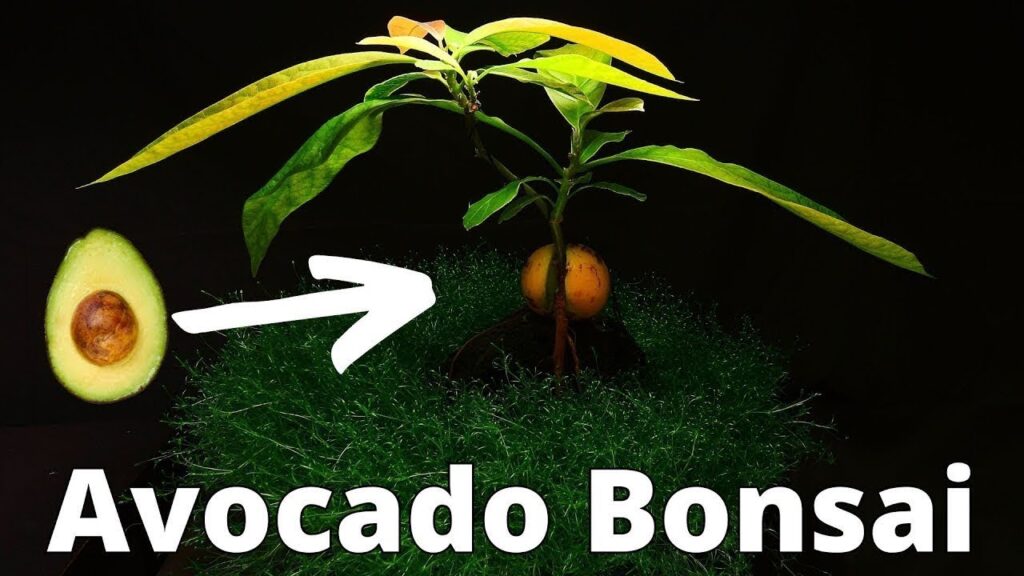
TL;DR (Quick Summary)
- Avocado grows extremely fast, making it ideal for beginner bonsai experiments.
- After one year, the tree shows strong trunk development, branching, and responds very well to pruning.
- Keep the soil slightly moist, give 5–6 hours of strong light, and prune early to shape the plant.
- Below you’ll find a step-by-step 1-year growth timeline, care instructions, and my bonsai mistakes.
- Complete avocado bonsai time lapse video included.
1-Year Avocado Bonsai Time Lapse (Video)
Why Grow an Avocado Bonsai?
Avocado trees grow incredibly fast from seed and react strongly to pruning, which makes them a fun and forgiving bonsai project for beginners. If you’ve ever looked at your avocado pit and thought “you could be more than just guacamole”, this is for you. For me, the charm lies in two things:
- You combine bonsai aesthetics with houseplant gardening.
- You can literally watch the evolution through timelapses – with dramatic changes every few weeks.
Outdoors, the plant grew explosively during the year, making it an excellent candidate for shaping, cutting back, and ongoing experimentation. It’s not a traditional textbook bonsai, but it’s a very entertaining avocado tree that thinks it’s a bonsai.
My 1-Year Bonsai Progress (What Happened So Far)
Like most avocado stories, it all started with a single seed in a jar of water on my windowsill. No fancy setup, just the classic “toothpick over glass” vibe and a lot of patience:
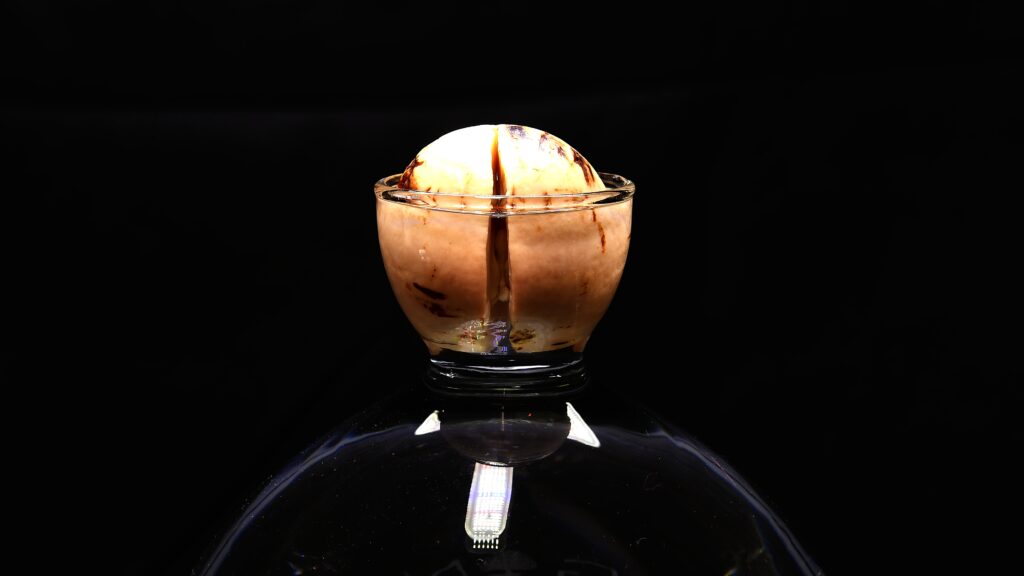
After a few weeks, the first roots started to grow and the seed cracked open. This is the moment where an ordinary avocado pit officially becomes bonsai material:
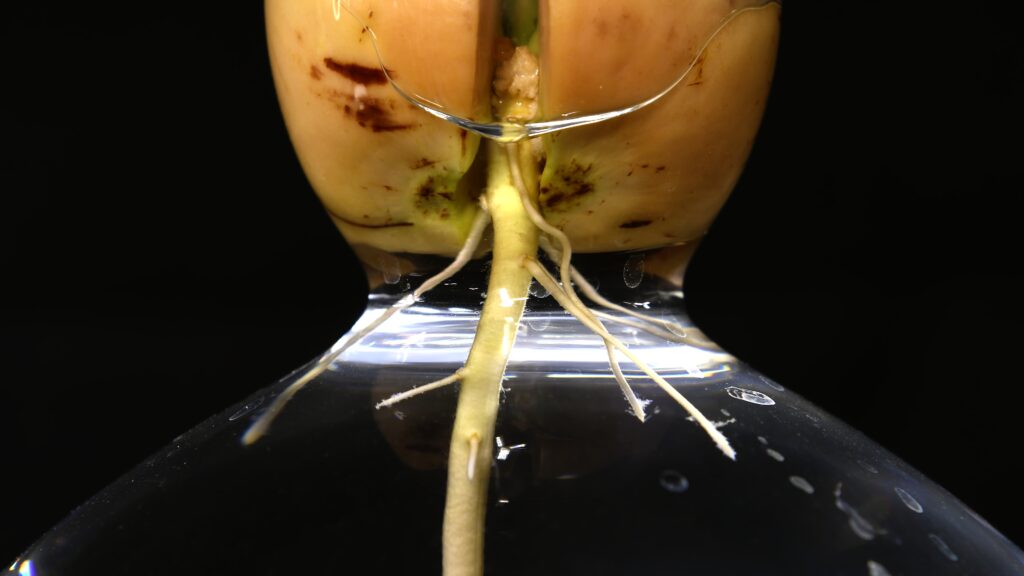
Once the seed had developed plenty of roots and its first leaves, I wrapped the root ball in keto clay, positioned it on a stone and planted everything in a pot. Keto clay is a sticky bonsai substrate that helps hold soil and roots in place – perfect for a little “root-over-rock” avocado drama:
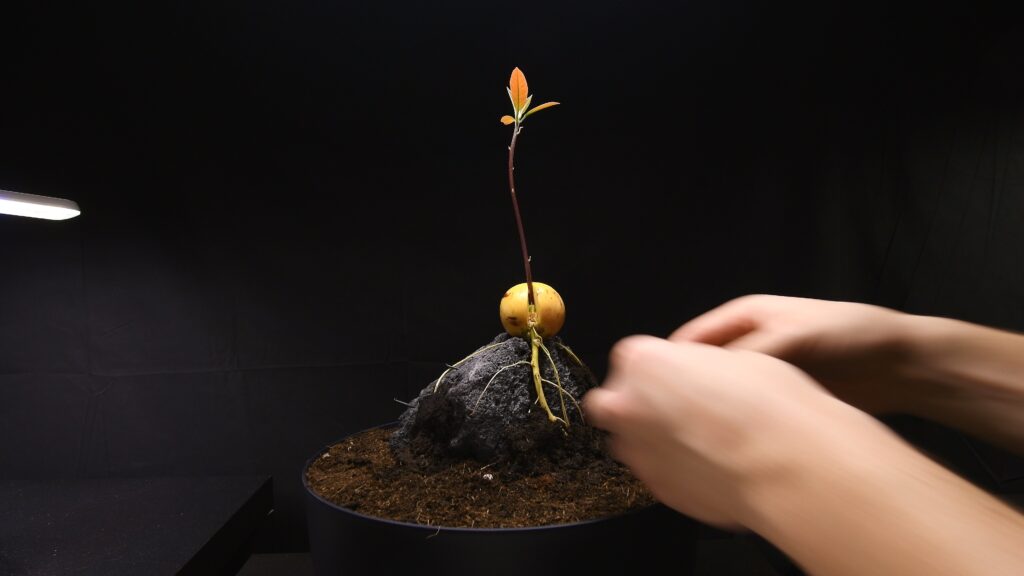
The picture below shows my avocado bonsai after about half a year, when I decided to let it grow on a little lava stone to make the roots visible and give it that dramatic cliffside-tree look:
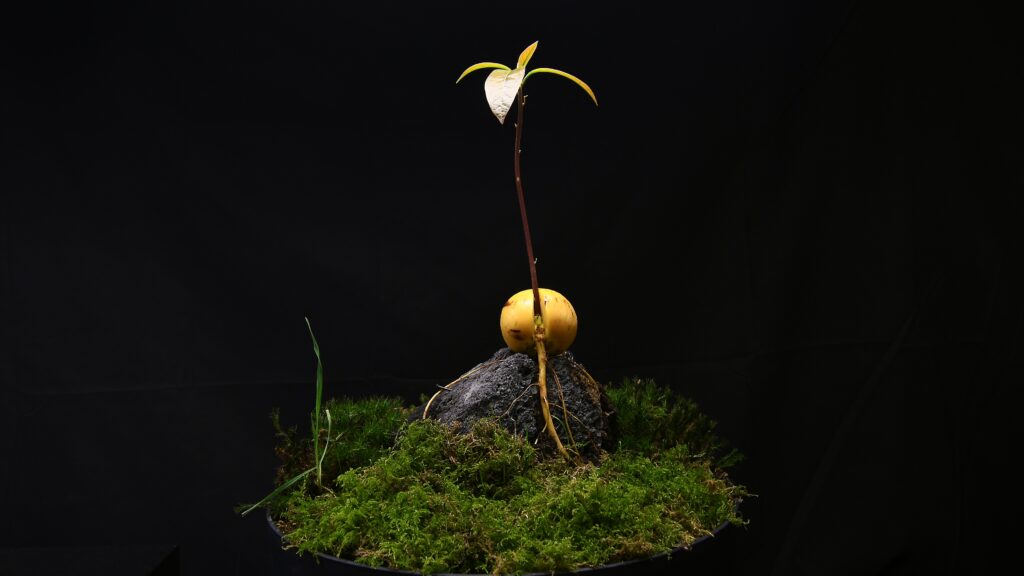
Some weeks later I decided to start bending the main stem with bonsai wire and cut off the top to encourage more growth and better branching. That’s the point where it stopped looking like a regular avocado stick and started looking like a tiny tree:
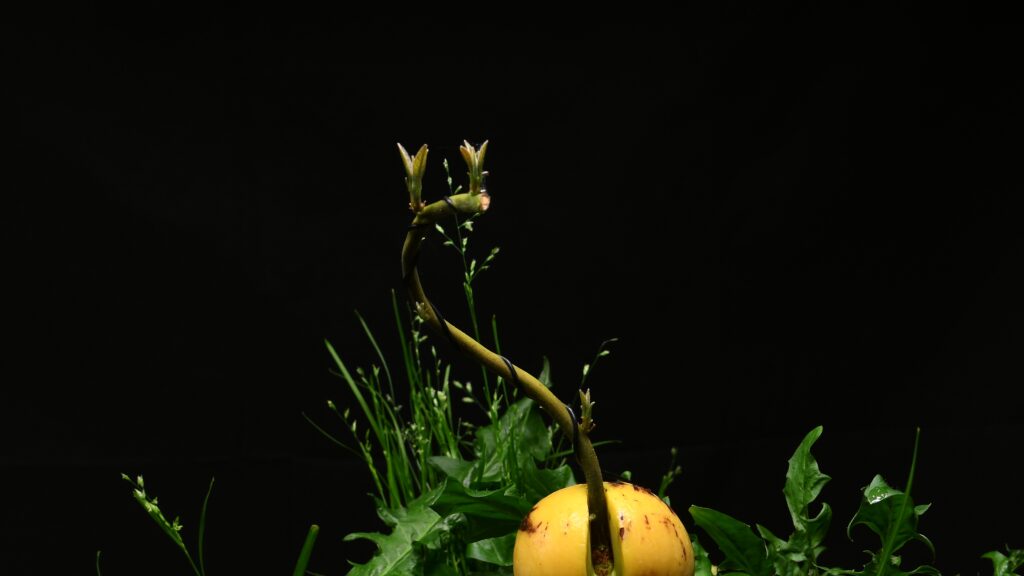
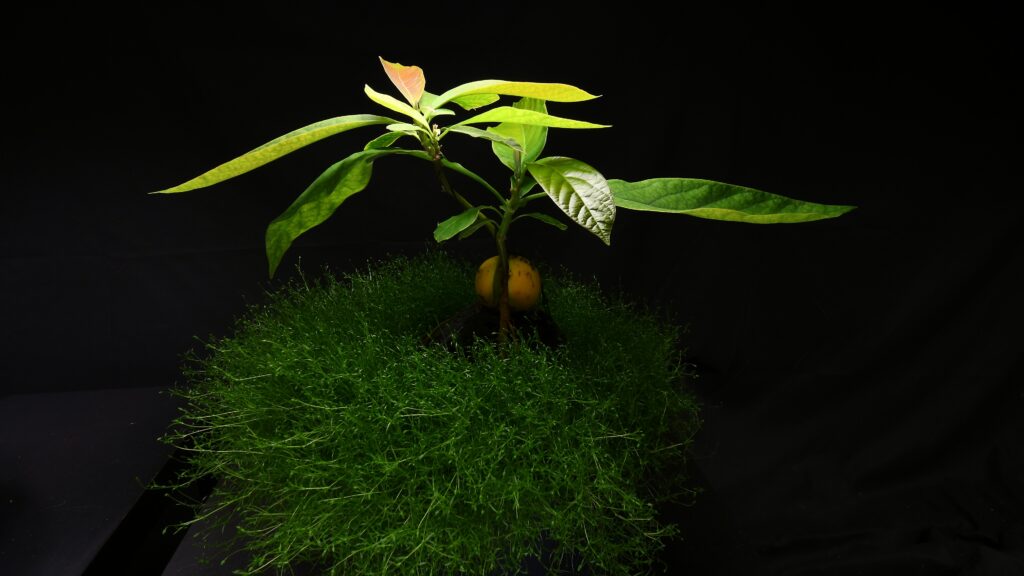
The result: a much more compact, bonsai-like silhouette with strong potential for further development. At some point I removed all the soil and some of the moss, since a lot of weeds grew there, and added star moss seeds, which gave my little bonsai a fantastic “tiny forest floor” look as you can see below:
Growing Conditions for a Healthy Avocado Bonsai
Here is a quick overview of the basic avocado bonsai care requirements. Even though this is a fun experiment, the tree still has the same needs as a normal avocado plant.
Soil / Substrate
Use a well-draining mix, for example:
- cactus mix
- 20–30% perlite
This prevents water logging, which avocados hate.
Light Requirements
Avocados need 5–6 hours of direct or very bright light daily. Indoor growers should use a grow light if natural light is insufficient. Leggy, stretched growth is usually a “your plant wants a window upgrade” problem.
Temperature
Ideal range:
15–29°C / 60–85°F
They tolerate warmth but dislike cold drafts or sudden temperature drops.
Watering
- Keep the soil evenly moist but never soaked.
- Water deeply once the top 2–3 cm feels dry.
- Occasional misting helps maintain humidity.
1-Year Growth Timeline (With Notes)
| Stage | Time Frame | What Happened | Notes |
|---|---|---|---|
| Germination | Weeks 1–6 | Seed split, root + sprout appeared | Fast and reliable |
| Early Growth | Months 1–2 | Plant grew tall; first pruning | Encourages branching |
| Branching Phase | Months 2–6 | Strong vertical + lateral growth | Thickening trunk begins |
| Shaping Phase | Months 6–12 | Second cutback, training new structure | Bonsai form takes shape |
More detailed footage is available in the timelapse video above. If you want to see the avocado bonsai changing week by week, the time lapse is the best way to watch the whole story in a few minutes.
Bonsai in General
I’m pretty new to bonsai and this is probably not the perfect example. So here is some more general information about bonsai: Bonsai is the art of cultivating miniature trees that reflect the beauty and character of full-sized trees found in nature. Instead of forcing plants to stay small, bonsai focuses on controlled pruning, root management and aesthetic shaping to create balanced, harmonious forms. The goal is not just a small plant, but a living sculpture that tells a story through its trunk movement, branch structure and seasonal changes. Even fast-growing species like avocado can be shaped into bonsai-like forms, making the practice accessible and rewarding for beginners.
If you want to learn more, check out Bonsai Empire: https://www.bonsaiempire.com/basics/ or the Royal Horticultural Society: https://www.rhs.org.uk/plants/types/trees/bonsai.
Common Avocado Bonsai Problems (and Fixes)
Leggy, stretched growth
→ Provide more light or prune more frequently.
Yellowing leaves
→ Overwatering or poor drainage – adjust watering and improve soil.
Drooping leaves
→ Underwatering or sudden temperature drops.
Mold or fungus
→ Improve airflow and reduce surface moisture.
FAQ – Avocado Bonsai (Beginner Friendly)
Can you bonsai an avocado tree from seed?
Yes. Avocado grows fast, responds well to pruning, and is great for beginners.
How long until it looks like a bonsai?
You can achieve early bonsai structure within 6–12 months.
Does it grow indoors?
Yes, but it needs bright light or a grow lamp.
Should I prune aggressively?
Yes. Early pruning is essential for keeping the tree compact.
Will it produce fruit?
Unlikely indoors and especially not as a bonsai – this project is purely ornamental.
Glossary (for Beginners)
- Node: Point where leaves and branches develop.
- Internode: Space between nodes; shorter internodes = bushier bonsai.
- Leader: Main growing tip.
- Cutback: Strong pruning to force new buds lower on the trunk.
Recommended Materials
Plant care gear
- optional LED grow light
- well-draining pot
- cactus/perlite mix
- sharp pruning scissors
If you want to create your own long-term plant timelapses, check out my complete Plant Time-Lapse Equipment Guide, where I share my camera setup, interval settings and lighting tips.
👉 https://blog.interesting-as-fck.com/plant-time-lapse-equipment-all-you-need/
If You Enjoyed This Bonsai Experiment, You Might Also Like:
How to Grow Broccoli Indoors
These tutorials show how different plant species develop over weeks and months — and how pruning and care influence growth patterns: The Magical Journey of Growing Broccoli: From Seed to Harvest Timelapse
My Monstera Care Guide – perfect for houseplant beginners: Monstera Care Guide: Watering, Light & Repotting (Monstera deliciosa)
Growing Tomatoes from Seed (with Time Lapse): Growing Tomatoes from Seed: A Journey from Seed to Harvest with Time-Lapse Magic