Date: 26.03.2025
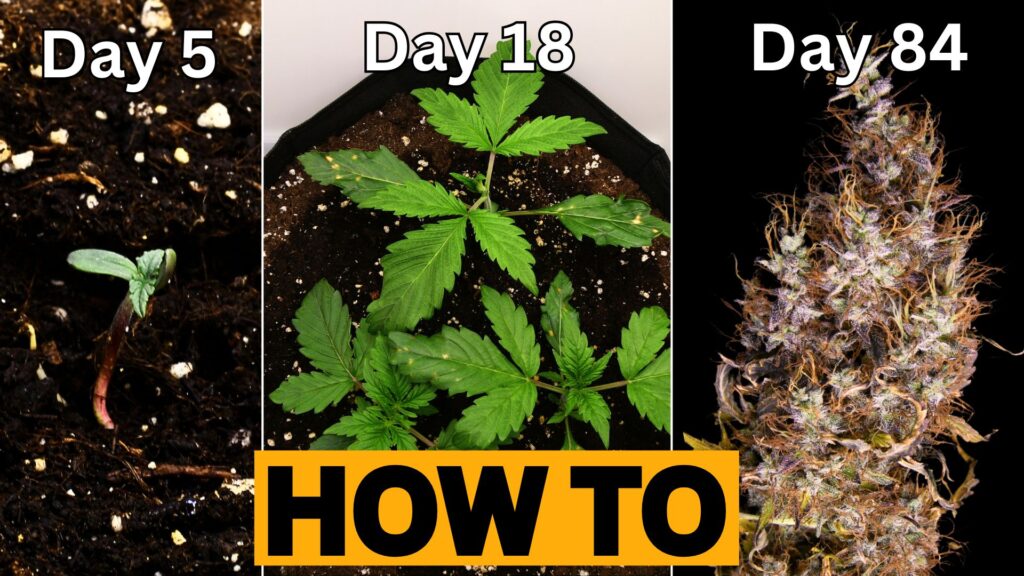
TL;DR (Quick Summary)
- This guide shows you how to grow autoflower cannabis from seed to harvest based on my own grow.
- Covers germination, soil mix, light schedule, temperature & humidity, watering, nutrients and training (LST & lollipopping).
- Autoflowers are fast (around 70–80 days), compact and great for beginners – but they don’t like heavy feeding or bad watering habits.
- You’ll also find tips for drying & curing and a list of common problems and how to fix them.
- Important: Only grow cannabis where it is legal in your country or region. This guide is for educational purposes.
How to Grow Autoflower Cannabis – My Experience & Best Tips
Growing autoflower cannabis can be surprisingly straightforward – as long as you give the plants the right basic conditions. Autoflowers are fast-growing, resilient and ideal for beginners and experienced growers who want quick, compact plants.
In this guide I’ll walk you through my autoflower grow from seed to harvest: how I germinated the seeds, what soil and nutrients I used, how I set up lights and climate, and which training techniques helped me get decent yields without stressing the plants.
Note: This article is not legal advice. Always check the laws in your country / state before you grow anything.
Germinating Autoflower Seeds & First Weeks
Like every cannabis grow, it all starts with good genetics and a clean germination setup.
I germinate my autoflower seeds in a classic way: either in moist paper towel or directly in a small starter pot – the key elements are moisture, warmth, darkness and patience.

In the image above you can see my germinated autoflower seeds with small white taproots. Once the root is about 0.5–1 cm long, I carefully place the seed into the soil (taproot down).
I usually put my autoflowers directly into their final pot, so they don’t get stressed by transplanting later – autos have a short life cycle and don’t really have time to recover from big mistakes.
After a few weeks, the young plants look like this:
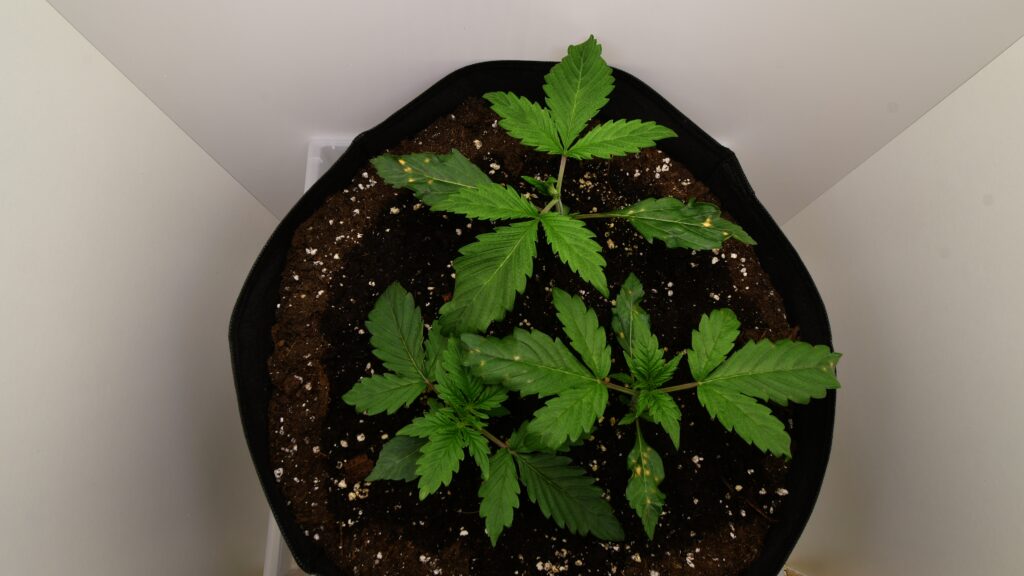
At this stage they are stable in their pots, have several sets of leaves and are ready for stronger light, gentle training and, later on, some nutrients.
The Best Soil for Autoflowers
Autoflowers love light, airy soil where roots can develop fast. Here’s a mix that worked well for me:
- 50% high-quality organic soil – base nutrients for the first weeks.
- 30% perlite – improves drainage and oxygen around the roots.
- 20% coco coir – retains moisture while keeping the structure loose.
Avoid soil that is extremely dense or heavily pre-fertilized – autoflowers are light feeders and can burn easily. If you are lazy like I am sometimes: just go to a good garden center and pick an airy, light, pre-fertilized soil meant for vegetables or herbs – this often works quite well too.
Optimal Lighting for Autoflower Growth
Autoflower cannabis doesn’t need a strict 12/12 schedule, but good lighting is still the biggest yield factor. From my experience, these light cycles work well:
- Seedlings (Day 0–14): Up to 24 hours of light for rapid early growth – but don’t use 100% light intensity or you’ll fry the babies.
- Vegetative stage (around Day 15–40): 20/4 or 18/6 to balance growth and electricity use. Slowly increase light intensity over several days.
- Flowering stage (from ~Day 40): 18/6 – enough light for bud development while still giving the plant a dark period.
I use a full-spectrum LED grow light hanging about 30–40 cm above the plants (depending on the model). If the leaf tips start to bleach or curl up, that’s a sign the light is too intense or too close.
Temperature & Humidity Control
Stable temperature and humidity are just as important as nutrients. Here are the ranges I aim for when growing autoflowers indoors:
- Seedlings: 22–26°C, 60–70% relative humidity.
- Vegetative stage: 22–28°C, 50–60% humidity.
- Flowering stage: 18–26°C, 40–50% humidity.
An exhaust fan plus an oscillating fan are essential to avoid stagnant air, heat pockets and mold. If humidity is way too low or too high, a humidifier / dehumidifier can help. I personally like using a Levoit humidifier like this one: humidifier on Amazon.
Watering Techniques
Most problems when people try to grow autoflower cannabis come from overwatering or underwatering. Here’s a simple guideline:
- Seedlings: Light misting or small waterings every 1–2 days, without soaking the entire pot.
- Vegetative stage: Water when the top 2–3 cm of soil feel dry and the pot is noticeably lighter.
- Flowering stage: Plants drink more, but still never let them sit in standing water – water thoroughly, then let the soil dry out a bit.
I keep the pH of my water between 6.0 and 6.5 so nutrients can be absorbed properly. If your tap water is extremely hard, a simple filter (like a jug filter) can already make things easier.
Fertilizing Autoflowers
Autoflowers do need nutrients – just not too much. I always start below the manufacturer’s recommendation and slowly increase if the plants look hungry.
- Vegetative stage:
- Use a nitrogen-rich fertilizer to support leaf and stem growth.
- Start with about 50% of the recommended dose and watch how the plants react.
- Flowering stage:
- Switch to a phosphorus- and potassium-rich bloom fertilizer.
- Gradually reduce nitrogen so the plant focuses more on flowers than on leaves.
Typical signs of overfeeding are very dark green leaves and burnt tips. Pale leaves or washed-out green can point to deficiencies. I like using fertilizers like this one: cannabis nutrient on Amazon.
Training Techniques for Maximum Yield
Because autoflower cannabis only has a short vegetative phase, gentle training techniques are your best friends. I mainly use low-stress training (LST) and later a bit of lollipopping.
1. Bending & Tying Down (LST)
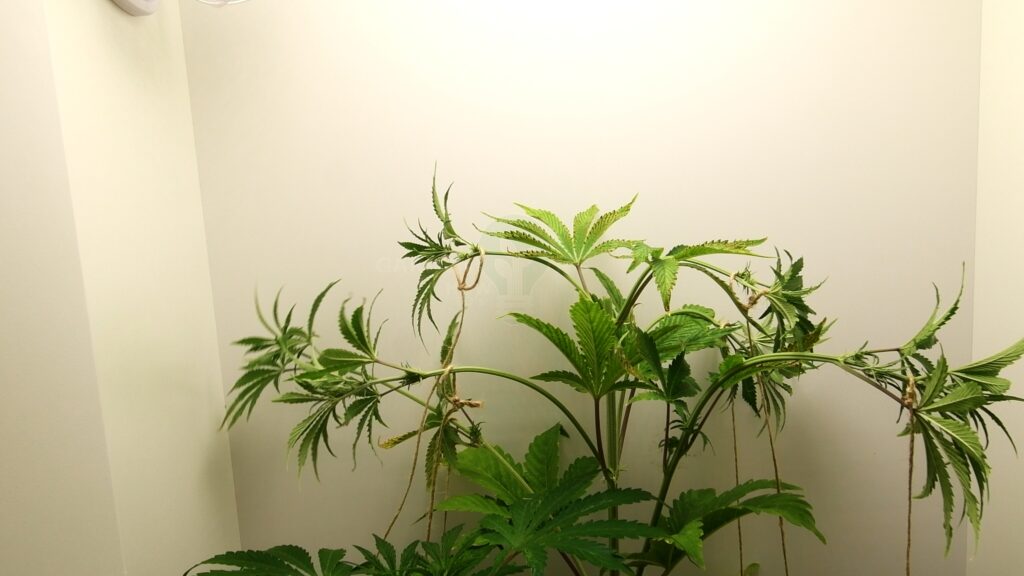
- Gently bend the main stem sideways and tie it down with soft wire or plant ties.
- This creates a flat, even canopy and allows lower bud sites to receive more light.
- Later you can use LST to keep multiple plants roughly the same height, which makes light positioning much easier.
2. Lollipopping for Bud Focus
- Around mid-flower, remove some of the lower branches and tiny “popcorn buds” that don’t get much light.
- This helps the plant focus energy on the top colas, producing larger, denser buds.
- Great tutorial: Royal Queen Seeds – Lollipopping Guide
Harvesting, Drying & Curing
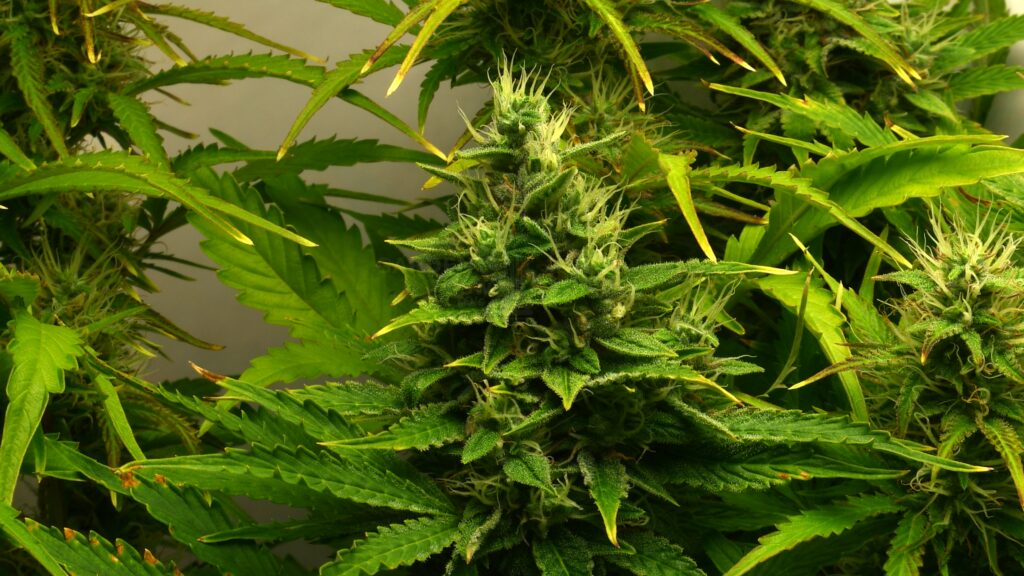
In early flower, buds are still small and covered in fresh white pistils. Later on, they thicken up and pack on weight:
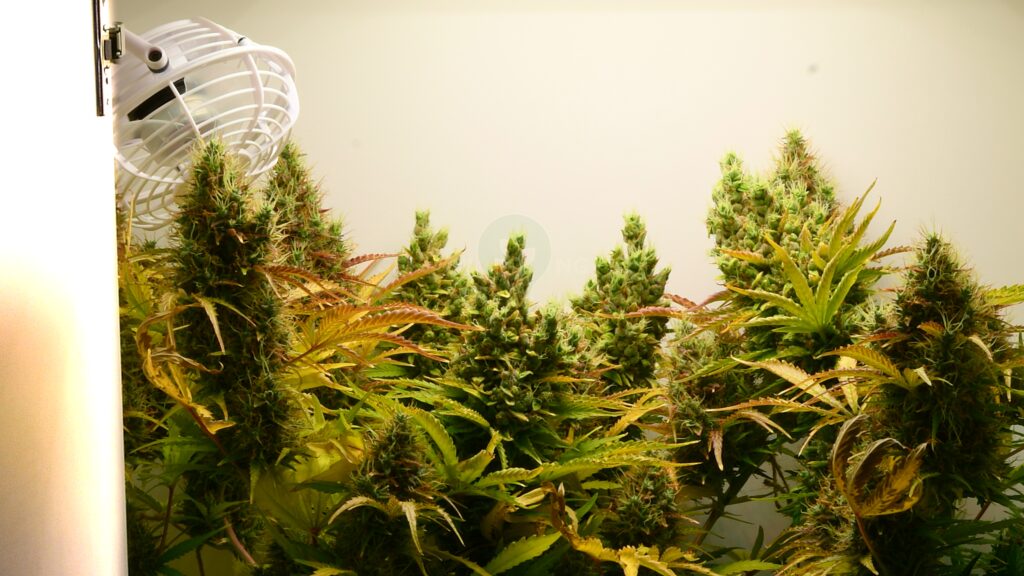
To nail the right harvest time, I use a small magnifier to check the trichomes. Around day 70–80 many autoflowers show mostly milky-white trichomes – a good point to harvest if you want a strong, uplifting effect.
- Drying: Hang the buds in a dark, well-ventilated room at 18–22°C and around 50% humidity for 7–10 days.
- Curing: Then move the dried buds into glass jars with 62% humidity packs. For the first 2 weeks, open the jars once a day to release excess moisture and improve aroma.
Common Growing Issues & Solutions
- Yellowing leaves early in growth: Often nitrogen deficiency or not enough nutrients (if your soil is very light).
- Brown spots on leaves: Can be a sign of calcium or magnesium deficiency.
- White powdery residue: Possible powdery mildew – improve airflow and lower humidity.
- Drooping leaves: Usually from overwatering or underwatering. Check pot weight and watering rhythm.
External Resources if You Want to Dive Deeper
If you want to dive even deeper into autoflower cannabis growing, these guides are worth a read:
- How to Grow Autoflowering Cannabis – Royal Queen Seeds
- Autoflowering Marijuana Cultivation Guide – Cannactiva
Final Thoughts
Do you prefer watching a grow instead of reading about it? Here’s my autoflower timelapse / tutorial video:
Growing autoflower cannabis is pretty beginner-friendly as long as you respect a few basics: light, airy soil, consistent light, clean watering habits, moderate feeding and gentle training. With every grow you’ll learn more and can fine-tune your setup and strains to your style. Happy (legal) growing! 🌱
More Guides & Timelapses You Might Enjoy
How to Make a Plant Timelapse – full walkthrough including camera setup & editing.
Plant Time-Lapse Equipment – All You Need – my complete gear guide: Plant Time-Lapse Equipment Guide
Jalapeno Time Lapse: From Seed to Harvest in 155 Days – perfect if you like watching other plants go from seed to harvest.